
Travel food strategies can make or break a trip. Eating well while traveling keeps energy levels high, supports health goals, and saves money. Many travelers struggle with unfamiliar menus, limited options, and inflated prices. The good news? A little planning goes a long way.
Whether someone is crossing continents or taking a weekend road trip, smart food choices transform the travel experience. This guide covers practical travel food strategies that work for any destination, budget, or dietary preference.
Table of Contents
ToggleKey Takeaways
- Effective travel food strategies start before your trip—research local restaurants, grocery stores, and dietary-friendly options at your destination.
- Pack non-perishable snacks like nuts, dried fruit, and protein bars to avoid overpriced airport food and prevent hunger during delays.
- Eat where locals eat by looking for restaurants with local-language menus, moderate prices, and fewer tourists.
- Save money by shopping at local grocery stores and markets for picnic supplies and breakfast items.
- Time your meals strategically—lunch specials often offer dinner-quality dishes at 30-50% lower prices.
- Prepare for dietary restrictions by carrying translation cards and learning to identify key ingredients in the local language.
Plan Ahead for Your Destination
Good travel food strategies start before anyone leaves home. Research makes all the difference between memorable meals and disappointing ones.
Research Local Food Options
Travelers should look up popular dishes and restaurants at their destination. Apps like TripAdvisor, Yelp, and Google Maps show reviews and photos from real diners. This research helps identify authentic spots and avoid tourist traps.
For those with dietary restrictions, advance research becomes essential. Vegans, vegetarians, and people with allergies can find suitable restaurants before arrival. Many cities now have dedicated apps for specific diets.
Learn Key Food Phrases
Knowing a few food-related words in the local language helps tremendously. Phrases like “no peanuts” or “vegetarian” can prevent allergic reactions and ensure proper meals. Translation apps work well, but memorizing basics shows respect and often gets better service.
Check Grocery Store Locations
Identifying nearby grocery stores or markets saves money and provides healthy options. Hotel rooms with mini-fridges allow travelers to store breakfast items, snacks, and drinks purchased at local prices rather than inflated hotel rates.
These travel food strategies require minimal effort but deliver maximum results. Spending 30 minutes researching food options before departure prevents hours of frustration later.
Pack Smart Snacks for the Journey
Airports, train stations, and highway rest stops charge premium prices for mediocre food. Smart travelers bring their own snacks.
Best Snacks for Travel
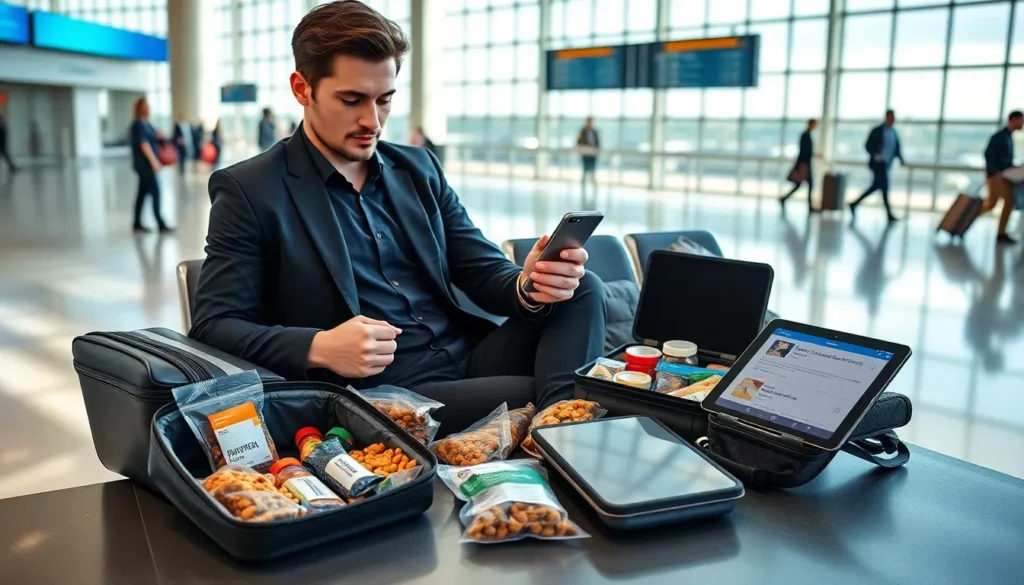
The ideal travel snacks are non-perishable, compact, and nutritious. Here are proven winners:
- Nuts and seeds: High protein, healthy fats, and they don’t crush easily
- Dried fruit: Natural sugars provide quick energy without the crash
- Protein bars: Choose ones with minimal added sugar
- Whole grain crackers: Pair with individual nut butter packets
- Dark chocolate: Satisfies sweet cravings and packs antioxidants
These travel food strategies keep hunger at bay during long flights or delayed connections.
TSA and International Rules
Solid foods typically pass through airport security without issues. Liquids, spreads, and gels face the usual 3.4-ounce limit. Travelers flying internationally should check destination country rules, some prohibit bringing fresh produce, meat, or dairy across borders.
Packing Tips
Reusable containers protect snacks from getting crushed. Ziplock bags work for loose items like trail mix. Packing snacks in carry-on luggage ensures access during the journey, not just at the destination.
These simple travel food strategies prevent hangry moments and impulse purchases at overpriced airport kiosks.
Navigate Restaurants and Local Cuisine
Eating out forms a major part of most travel experiences. Smart restaurant choices enhance the trip without destroying the budget or waistline.
Find Authentic Local Spots
The best travel food strategies involve eating where locals eat. Signs of authentic restaurants include:
- Menus in the local language (or dual language, not just English)
- More locals than tourists inside
- Moderate prices compared to tourist-heavy areas
- Lines during peak meal times
Walking a few blocks from major attractions often reveals better food at lower prices.
Order Strategically
Travelers can try multiple dishes by ordering appetizers or sharing plates. This approach allows sampling local cuisine without overspending or overeating. Lunch specials at dinner-quality restaurants provide another smart option.
Handle Dietary Restrictions Abroad
Communicating dietary needs requires preparation. Travelers should:
- Carry cards explaining their restrictions in the local language
- Learn to identify problem ingredients in menus
- Choose cuisines naturally aligned with their needs (Mediterranean for vegans, for example)
These travel food strategies help people enjoy local cuisine while respecting personal health requirements.
Budget-Friendly Eating Tips While Traveling
Food costs add up quickly during travel. These travel food strategies keep expenses reasonable without sacrificing quality.
Embrace Grocery Stores and Markets
Local supermarkets offer insight into regional food culture at fraction of restaurant prices. Travelers can assemble picnic lunches from fresh bread, local cheeses, and seasonal fruits. Markets often sell prepared foods at reasonable prices too.
Time Meals Strategically
Lunch menus frequently offer the same dishes as dinner at 30-50% lower prices. Happy hours provide discounted drinks and appetizers. Eating a larger lunch and lighter dinner cuts costs significantly.
Use Apps and Deals
Food apps like Too Good To Go rescue unsold meals from restaurants at steep discounts. Local deal sites and apps vary by country but often offer substantial savings. Credit cards with dining rewards offset some expenses.
Cook When Possible
Accommodations with kitchens or kitchenettes enable significant savings. Even a simple breakfast prepared in-room, yogurt, fruit, and coffee, saves $15-20 daily compared to hotel restaurants.
Street Food and Food Halls
Street vendors and food halls serve authentic local dishes at accessible prices. These venues also let travelers sample multiple items without committing to full restaurant meals.
These budget-focused travel food strategies allow more spending on experiences and less on overpriced tourist meals.