

In the high-stakes world of modern hospitality, efficiency is everything. Kitchens are shrinking, labor costs are rising, and the pressure to streamline inventory is higher than ever. Yet, diners are more educated and demanding than they have ever been. In this environment, the “Swiss Army Knife” ingredients—those products that can traverse the boundary between the bar, the savory line, and the pastry station—become the most valuable assets in a restaurant’s arsenal.
Among these versatile powerhouses, few are as underutilized as balsamic vinegar of Modena. For too long, this liquid gold has been relegated to the cold line or the bread basket. This limited view leaves money on the table. For the savvy operator, a bottle of premium balsamic is a tool for cross-utilization that drives check averages and elevates guest perception across every daypart.
The Bar Program: The Rise of the Savory Cocktail
The era of the sickly-sweet cocktail is fading. Modern guests crave complexity, bitterness, and botanical depth. Mixologists are increasingly looking to the pantry for acid profiles that go beyond lemon and lime.
- The Balsamic Sour: Replace simple syrup with aged balsamic in a Whiskey Sour. The vinegar adds a stunning amber hue, a velvety texture, and woody notes that bridge the gap between the char of the whiskey barrel and the citrus.
- The Umami Rim: Instead of salt, use a reduction of balsamic to rim a glass for a Bloody Mary or a Tequila-based drink. It provides an intense savory hit with every sip.
The Hot Line: Maillard and Glazing
On the savory line, balsamic should be treated as a finishing salt or a high-speed sauce base. Its high sugar content (from the grape must) makes it an accelerant for caramelization.
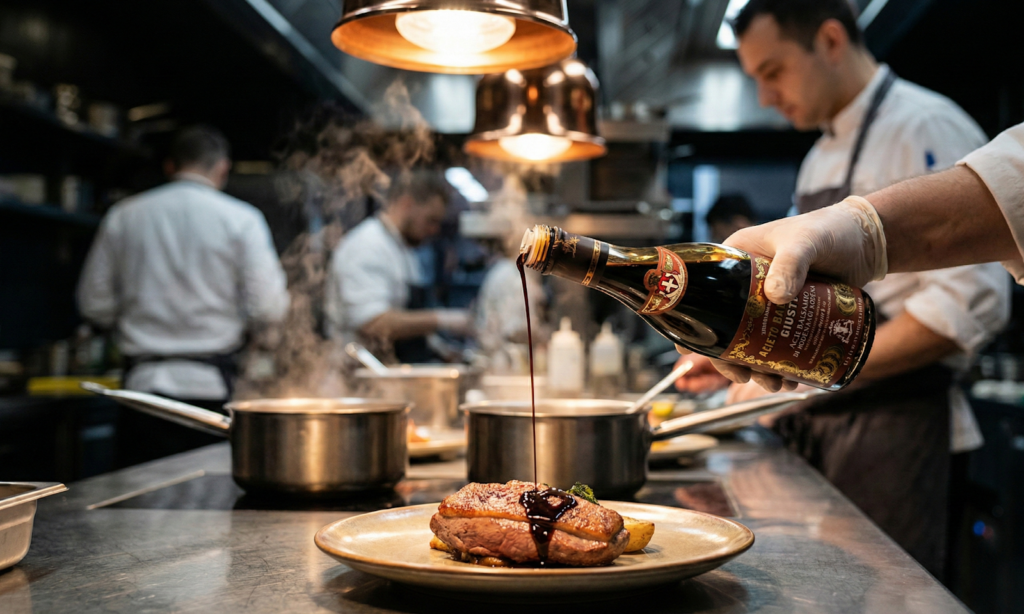
- Instant Pan Sauces: After searing a steak or duck breast, deglazing the pan with balsamic lifts the fond immediately. Mounted with a knob of cold butter, it creates a glossy, restaurant-quality sauce in sixty seconds without needing a veal stock reduction.
- The Vegetable Upgrade: As plant-based options become mandatory on menus, balsamic offers the “meaty” depth that vegetables often lack. Roasting Brussels sprouts or carrots with a balsamic glaze mimics the richness of meat jus, satisfying even the most carnivorous diners.
Pastry: Texture and Contrast
The pastry station is perhaps the most exciting frontier. Acidity is the secret to cutting the cloying sweetness of modern desserts.
- Chocolate’s Best Friend: Cocoa is naturally acidic. Adding a tablespoon of balsamic to a chocolate ganache or brownie batter intensifies the fruit notes of the chocolate, making it taste more expensive and complex.
- Texture Control: In sorbets and gelatos, the density of the grape must helps control the freezing point, creating a smoother, creamier mouthfeel while offering a sophisticated savory-sweet flavor profile.

The Business Case: Yield and Perception
Why should an operator source a heritage brand like Giusti over a generic commercial vinegar? The answer lies in the “Yield to Cost” ratio. Generic vinegar is watery and sharp; you need two tablespoons to get flavor. A premium, aged balsamic is potent and viscous; you need only a few drops to achieve a superior impact. While the cost per bottle is higher, the cost per plate is often comparable, but the perceived value is drastically different.
Listing “Aged Balsamic of Modena” on a menu description allows for a higher price point. It signals to the guest that you obsess over ingredients. In a market where everyone serves food, the restaurants that serve stories and quality are the ones that thrive.