
Starting a cooking channel has never been more accessible. Millions of viewers search for recipes, cooking tips, and food inspiration every day. This creates a real opportunity for aspiring creators who want to share their passion for food.
Whether someone dreams of showcasing family recipes or teaching quick weeknight meals, a cooking channel can turn that passion into a platform. The best part? Getting started doesn’t require professional experience or expensive equipment. It requires clear planning, consistent effort, and a genuine love for cooking.
This guide covers everything beginners need to know about how to start a cooking channel. From picking a niche to growing an audience, each step builds toward creating content that viewers actually want to watch.
Table of Contents
ToggleKey Takeaways
- Starting a cooking channel requires clear planning and consistency, not expensive equipment or professional experience.
- Choose a specific niche—like budget meals, cultural cuisines, or quick recipes—to stand out and attract a loyal audience.
- Prioritize audio quality over video; viewers tolerate grainy footage but won’t watch content with poor sound.
- Hook viewers in the first 10 seconds with the finished dish or a compelling question to maximize watch time.
- Grow your cooking channel by posting consistently, engaging with comments, and cross-promoting on platforms like TikTok and Pinterest.
- Use platform analytics to track watch time and audience retention, then adjust your content strategy based on what performs best.
Choosing Your Cooking Niche and Style
Every successful cooking channel starts with a clear focus. A niche helps creators stand out in a crowded space and attract viewers who care about specific topics.
Think about what makes a cooking channel unique. Is it vegan comfort food? Budget-friendly meals for college students? Authentic regional cuisines? The more specific the focus, the easier it becomes to build a loyal audience.
Here are some popular cooking channel niches to consider:
- Quick meals under 30 minutes
- Baking and desserts
- Healthy or diet-specific recipes (keto, gluten-free, plant-based)
- Cultural or regional cuisines
- Cooking for beginners
- Gourmet dishes on a budget
Style matters just as much as the niche. Some creators prefer a calm, instructional approach. Others bring high energy and humor. The key is authenticity. Viewers connect with hosts who feel genuine on camera.
Before filming a single video, creators should watch other cooking channels in their potential niche. This research reveals gaps in the market and shows what works. A cooking channel that fills an unmet need has a much better chance of success.
Essential Equipment for Filming Cooking Videos
Good equipment improves video quality, but beginners don’t need to spend thousands of dollars. A cooking channel can start with basic gear and upgrade over time.
Camera Options
A smartphone with a decent camera works perfectly for new creators. Modern phones shoot in 4K and handle various lighting conditions well. For those ready to invest, entry-level mirrorless cameras like the Sony ZV-E10 or Canon EOS M50 Mark II offer excellent video quality.
Audio Equipment
Sound quality often matters more than video quality. Viewers will forgive slightly grainy footage, but they won’t tolerate bad audio. A lavalier microphone (around $20-50) clips to clothing and captures clear voice recordings. Shotgun microphones work well for overhead shots.
Lighting
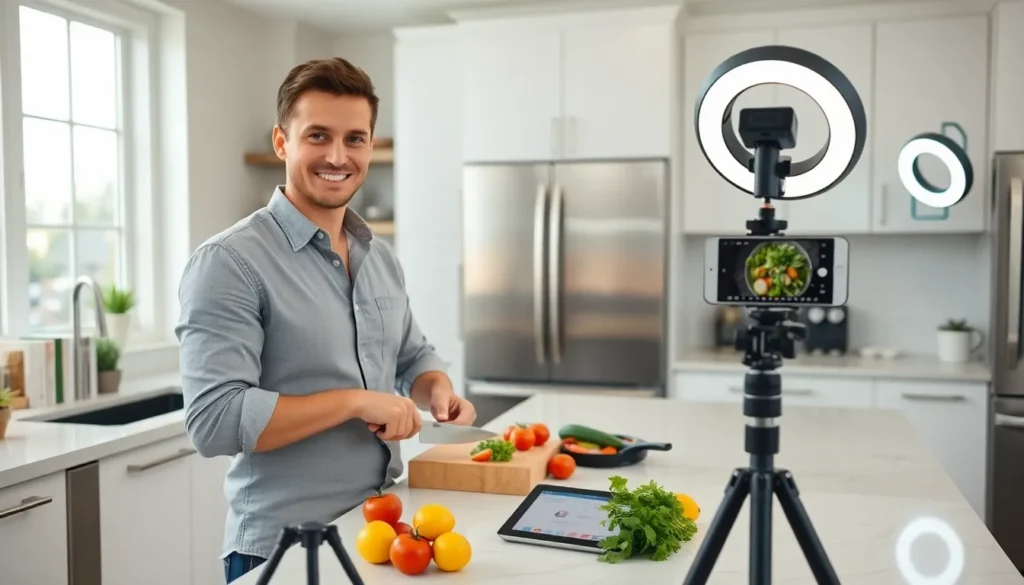
Natural light from a window creates beautiful footage for cooking channels. When natural light isn’t available, a basic ring light or softbox kit provides consistent illumination. Two-point lighting setups eliminate harsh shadows on food.
Tripods and Mounts
A sturdy tripod keeps shots stable. For overhead cooking shots, creators need either a boom arm or a dedicated overhead mount. These angles show the cooking process clearly and have become standard for cooking channel content.
Editing Software
Free options like DaVinci Resolve handle most editing needs. iMovie works well for Mac users starting out. As a cooking channel grows, investing in Adobe Premiere Pro or Final Cut Pro offers more advanced features.
Setting Up Your Kitchen for Recording
The kitchen becomes a studio for any cooking channel. A few adjustments transform an ordinary space into a professional-looking set.
Declutter the Background
Remove distracting items from view. Viewers should focus on the cooking, not the clutter behind the host. Some creators add decorative elements like plants, cookbooks, or attractive containers to create visual interest without distraction.
Optimize Lighting Position
Position the main cooking area near the best light source. For most kitchens, this means working near a window. Avoid overhead fluorescent lights when possible, they create unflattering shadows and color casts.
Plan Camera Angles
Most cooking channels use multiple angles:
- A wide shot showing the host and workspace
- A close-up on the cutting board or stovetop
- An overhead shot for mixing, plating, or detailed work
Mark positions on the counter with small tape pieces. This ensures consistent framing across videos.
Manage Kitchen Sounds
Kitchens echo. Adding soft materials like towels or rugs (out of frame) absorbs sound and improves audio quality. Turn off noisy appliances like refrigerators during voice recordings when practical.
Test Everything First
Before filming a full cooking channel video, record a test clip. Check the lighting, audio levels, and framing. This prevents discovering problems after spending hours cooking on camera.
Tips for Creating Engaging Cooking Content
Great cooking channel content balances instruction with entertainment. Viewers want to learn, but they also want to enjoy watching.
Hook Viewers Immediately
The first 10 seconds determine whether someone keeps watching. Start with the finished dish, an interesting fact, or a compelling question. Skip long introductions, save the detailed explanations for later.
Show, Don’t Just Tell
Visual demonstration beats verbal explanation every time. Instead of saying “dice the onion finely,” show the technique up close. A cooking channel that prioritizes clear visuals helps viewers actually replicate recipes.
Keep Pacing Tight
Edit out dead time. Viewers don’t need to watch water boil for three minutes. Use jump cuts or time-lapses to maintain momentum. Most successful cooking channel videos run between 5-15 minutes.
Add Personality
Share stories about the recipe. Mention why this dish matters or where it came from. Personal touches make content memorable. Viewers return to cooking channels because they like the host, not just the recipes.
Include Clear Instructions
List ingredients and measurements on screen. Repeat key steps verbally. Many viewers cook along with videos, so clarity prevents frustration. Consider adding timestamps for different sections.
Optimize for Search
Write descriptive titles that include the dish name. Use relevant tags and write detailed descriptions. A cooking channel grows faster when videos appear in search results for popular recipe queries.
Growing Your Audience and Building a Community
Creating great content is only half the equation. A cooking channel needs promotion and community engagement to grow.
Post Consistently
Regular uploads signal reliability to both viewers and algorithms. Whether it’s once a week or twice a month, stick to a schedule. Consistency builds audience expectations and trust.
Leverage Multiple Platforms
Don’t limit a cooking channel to one platform. Share short clips on TikTok and Instagram Reels. Post photos on Pinterest. Cross-promotion exposes content to different audiences and drives traffic back to main videos.
Engage With Comments
Respond to viewer questions and feedback. This interaction builds loyalty and provides ideas for future content. When viewers feel heard, they become advocates who share the cooking channel with others.
Collaborate With Other Creators
Partnering with other food creators introduces channels to new audiences. Collaborations can range from simple shoutouts to full joint videos. Look for creators with similar audience sizes for mutual benefit.
Ask for Specific Actions
Include clear calls to action. Ask viewers to subscribe, comment their favorite ingredient, or share the video. People often need prompting to take these steps.
Analyze Performance Data
Platform analytics reveal what works. Pay attention to watch time, click-through rates, and audience retention graphs. These metrics show which cooking channel videos resonate and inform future content decisions.