
Food photography transforms ordinary meals into visual experiences that make viewers hungry. This specialized craft combines technical skill with artistic vision to create images that sell products, fill restaurant seats, and inspire home cooks around the world.
Whether scrolling through Instagram or flipping through a cookbook, people encounter food photography daily. The discipline has grown from simple product shots into a multi-billion dollar industry that shapes how consumers think about eating. Understanding what food photography involves, and how to do it well, opens doors for aspiring photographers and marketers alike.
Table of Contents
ToggleKey Takeaways
- Food photography is the practice of capturing food in ways that make it look appealing, fresh, and appetizing for commercial and editorial purposes.
- High-quality food images can increase restaurant sales by up to 30% and significantly boost social media engagement.
- Essential equipment includes a DSLR or mirrorless camera, prime or macro lenses, and lighting tools like reflectors and softboxes.
- Mastering lighting techniques—such as backlighting for drama and side lighting for texture—separates professional food photography from amateur shots.
- Composition strategies like the rule of thirds, strategic camera angles, and thoughtful color choices create visually compelling food images.
- Food photography styles range from commercial and editorial to social media and restaurant applications, each with distinct creative requirements.
Defining Food Photography and Its Purpose
Food photography is the practice of photographing food in ways that make it look appealing, fresh, and appetizing. Professional food photographers use lighting, composition, and styling to highlight textures, colors, and details that attract viewers.
The purpose of food photography extends beyond documentation. Restaurants use food photos to fill tables. Brands use them to sell products. Publishers use them to illustrate recipes. Social media influencers build entire careers around capturing what they eat.
At its core, food photography serves commercial and editorial goals. Commercial food photography appears in advertisements, packaging, and menus. Editorial food photography fills magazines, cookbooks, and blogs. Both require different approaches, but they share one objective: making food irresistible.
Why Food Photography Matters
Studies show that high-quality food images increase sales by up to 30% in restaurants with visual menus. Online, posts with professional food photos receive significantly more engagement than those with amateur snapshots.
Food photography also preserves culinary traditions and documents cultural practices. It tells stories about ingredients, preparation methods, and the people who cook. A single well-executed food photograph can communicate flavor, texture, and aroma without words.
Essential Equipment for Food Photography
Starting food photography requires specific gear, though beginners don’t need to spend thousands immediately. The essentials break down into camera equipment, lighting tools, and styling accessories.
Camera and Lenses
A DSLR or mirrorless camera with manual controls provides the flexibility food photography demands. Full-frame sensors capture more detail, but crop-sensor cameras work well for beginners.
Lens selection matters enormously. A 50mm prime lens offers natural perspectives without distortion. Macro lenses between 90mm and 105mm capture close-up details like steam rising from soup or sugar crystals on a doughnut. Many food photographers keep a 24-70mm zoom lens for versatility.
Lighting Equipment
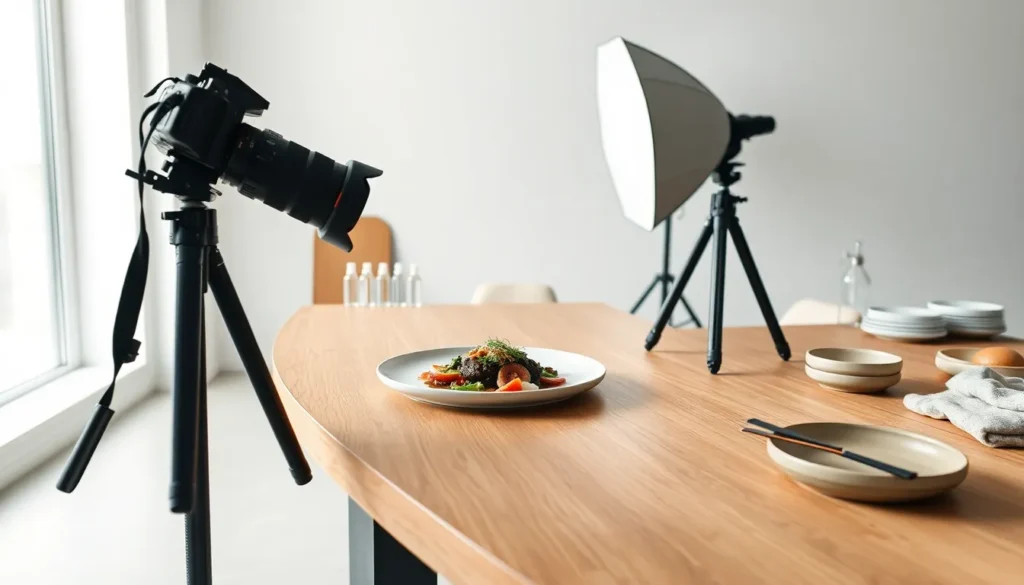
Natural light produces beautiful food images when controlled properly. A large window provides soft, diffused illumination that flatters most dishes. Reflectors bounce light into shadows, reducing harsh contrasts.
Artificial lighting expands creative options. Continuous LED panels let photographers see exactly how light falls before shooting. Studio strobes freeze motion and overpower ambient light when needed. Softboxes and diffusion panels soften artificial sources to mimic window light.
Styling Tools and Props
Food photographers collect backgrounds, surfaces, linens, and tableware to create scenes. Weathered wood boards, marble slabs, and textured fabrics add visual interest. Plates, utensils, and glassware contribute to the story each image tells.
A styling kit includes tweezers for precise placement, spray bottles for adding moisture, and glycerin for creating fake condensation. These tools help photographers control every element in the frame.
Key Techniques for Stunning Food Photos
Successful food photography combines technical proficiency with creative decision-making. Several core techniques separate professional work from amateur attempts.
Lighting Approaches
Backlighting creates drama and highlights translucent elements like beverages, sauces, and thin-sliced ingredients. Side lighting emphasizes texture on crusty bread, grilled meats, and layered desserts. Diffused front lighting works for flat-lay compositions where even illumination matters.
The quality of light, soft versus hard, affects mood dramatically. Soft light from large sources minimizes shadows and creates an inviting feel. Hard light from small sources adds contrast and edge.
Composition Strategies
The rule of thirds places key elements along invisible gridlines to create visual balance. Negative space draws attention to the main subject. Leading lines guide viewers through the frame.
Camera angles change everything in food photography. Overhead shots (flat-lays) work for pizzas, salads, and table spreads. 45-degree angles show both the top and front of dishes like burgers or layer cakes. Straight-on angles highlight stacked or layered foods.
Color and Styling
Color theory informs prop selection and background choices. Complementary colors (like orange food on blue plates) create visual pop. Analogous color schemes produce harmony and sophistication.
Food styling involves arranging ingredients to look their best while remaining appetizing. Unlike older practices, modern food photography favors real, edible food over heavily manipulated substitutes. Fresh herbs, sauce drizzles, and scattered ingredients add life to compositions.
Common Styles and Applications
Food photography encompasses several distinct styles, each suited to different purposes and platforms.
Commercial Food Photography
Commercial food photography appears in advertising campaigns, product packaging, and corporate marketing materials. This style prioritizes brand consistency and product accuracy. Fast-food chains, grocery brands, and beverage companies rely on commercial food photographers to make their products look appealing on billboards, websites, and social media ads.
Editorial Food Photography
Magazines, cookbooks, and food blogs feature editorial food photography. This style allows more creative freedom than commercial work. Photographers develop concepts, tell stories, and evoke emotions. Editorial food images often include human elements, hands reaching for food, kitchen scenes, or dining moments.
Social Media Food Photography
Instagram and Pinterest have created demand for food photography optimized for mobile viewing. This style emphasizes bold colors, strong compositions, and immediate visual impact. Many food photographers now shoot vertical formats specifically for Stories and Reels.
Restaurant and Menu Photography
Restaurants need food photography for menus, websites, and delivery platforms. This application requires efficiency, photographers often capture dozens of dishes in single sessions. The images must accurately represent what customers will receive while making dishes look their absolute best.