
Great food photography examples can transform an ordinary dish into visual art. Whether someone shoots for a restaurant menu, social media feed, or personal portfolio, studying proven techniques helps sharpen creative skills. This guide breaks down specific food photography examples across multiple styles, from overhead flat lays to dramatic low-light setups. Each approach offers distinct advantages depending on the dish, mood, and final use. Photographers at any skill level will find actionable ideas to improve their next shoot.
Table of Contents
ToggleKey Takeaways
- Overhead flat lays are excellent food photography examples for capturing colorful spreads, charcuterie boards, and dishes with interesting textures.
- Side angle shots between 25–45 degrees add depth and drama, making them ideal for tall, layered foods like burgers and stacked waffles.
- Moody, low-light food photography examples work best with a single side or back light source and dark backgrounds to create warmth and atmosphere.
- Action shots featuring pours, drizzles, and steam require fast shutter speeds (1/500+) and backlighting to capture dynamic, attention-grabbing moments.
- Minimalist compositions with clean backgrounds and the rule of odds (using 3 or 5 elements) create impactful food photography examples for commercial and editorial use.
- Applying color theory—complementary or analogous color pairings—elevates your food photos and draws viewer attention instantly.
Classic Overhead Flat Lay Photography
The overhead flat lay remains one of the most popular food photography examples for good reason. This angle captures entire table scenes, making it ideal for breakfast spreads, pizza, and dishes with interesting surface textures.
Why Flat Lays Work So Well
Flat lay food photography examples succeed because they show every element at once. A camera positioned directly above the subject creates a clean, organized look. This style works particularly well for:
- Colorful grain bowls and salads
- Charcuterie and cheese boards
- Pancake stacks with scattered berries
- Ingredient layouts (think recipe blogs)
The key is arranging items with intention. Negative space matters here. Leave breathing room between elements rather than cramming everything together.
Practical Tips for Better Flat Lays
Lighting makes or breaks these food photography examples. Natural light from a window works best, position the setup so light falls evenly across the scene. Harsh shadows distract from the food itself.
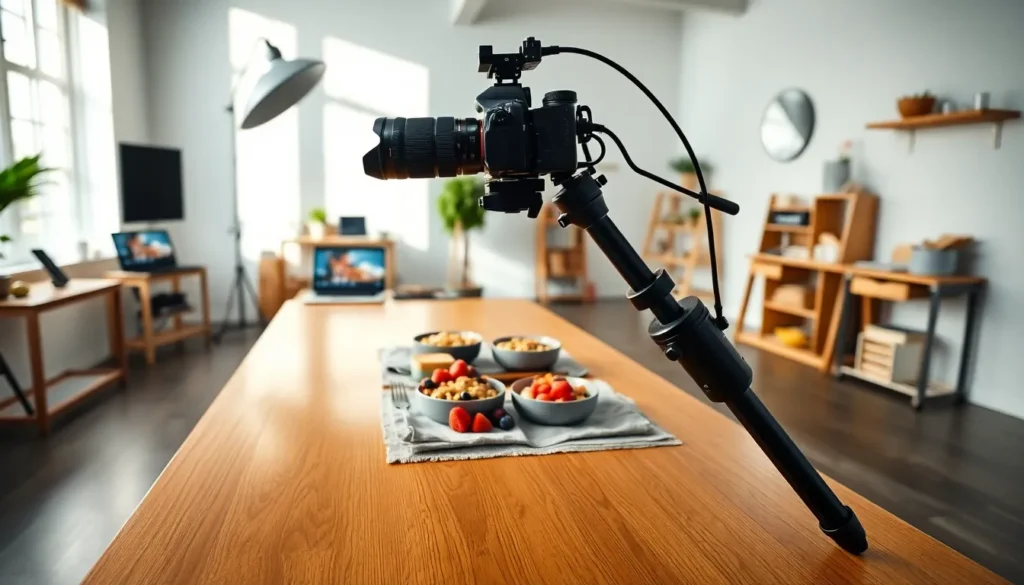
Props deserve careful attention too. Linen napkins, vintage cutlery, and fresh herbs add context without stealing focus. The dish should always remain the star. Many photographers use a tripod with an articulating arm to keep the camera steady directly overhead. This prevents the slight blur that ruins otherwise solid food photography examples.
Dramatic Side Angle and Low Light Examples
Side angle shots create depth and drama that flat lays simply can’t achieve. These food photography examples highlight texture, layers, and height, perfect for burgers, layered cakes, and steaming soups.
The Power of a 45-Degree Angle
Most restaurant food photography examples use angles between 25 and 45 degrees. This perspective mimics how diners actually see their plates. It feels natural and inviting.
Tall foods benefit most from side angles. Think towering burgers with melting cheese, stacked waffles dripping with syrup, or elaborate milkshakes topped with candy. The viewer’s eye travels up the composition, appreciating each layer.
Low Light and Moody Setups
Dark, moody food photography examples have grown increasingly popular. They suit rustic dishes, craft cocktails, and comfort foods like stews or roasted meats.
To achieve this look:
- Use a single light source positioned to the side or slightly behind the subject
- Choose dark backgrounds, slate, dark wood, or black fabric
- Reduce fill light to let shadows fall naturally
- Edit for deeper blacks and muted highlights
These food photography examples evoke warmth and intimacy. They tell a story beyond just showing what’s on the plate. A glass of red wine beside a rustic pasta dish, lit by candlelight simulation, creates atmosphere that bright, airy shots can’t match.
Action Shots and Dynamic Food Moments
Static images have their place, but action-oriented food photography examples grab attention instantly. Movement adds energy and makes viewers feel like they’re part of the moment.
Capturing the Pour, Drizzle, and Splash
Some of the most memorable food photography examples involve liquids in motion. Honey drizzling onto pancakes. Cream swirling into coffee. Sauce being poured over a perfectly seared steak.
These shots require faster shutter speeds, typically 1/500 or higher. A burst mode helps capture the perfect frame since timing is everything. Practice the motion several times before actually shooting.
Steam and Sizzle Photography
Fresh-from-the-oven steam signals that food is hot and ready to eat. Effective food photography examples often enhance this effect. Photographers sometimes use a handheld steamer just out of frame, or they shoot immediately when food comes off the heat.
Backlighting makes steam visible. Position the light source behind the dish so the vapor catches and glows. This technique transforms a simple bowl of soup into something cinematic.
The “Hero Bite” Technique
Food photography examples featuring a bite taken from the subject show authenticity. A cookie with a chunk missing, a sandwich cut in half with filling visible, or a fork lifting a perfect twirl of pasta, these images communicate taste in a way pristine, untouched food cannot.
Minimalist and Styled Composition Ideas
Less can absolutely be more. Minimalist food photography examples strip away distractions to focus entirely on the dish. This approach suits high-end restaurants, product packaging, and editorial work.
Clean Backgrounds and Simple Props
A single subject against a solid background creates immediate impact. White, light gray, or soft pastels work well for bright, modern food photography examples. The viewer’s eye has nowhere to go except the food.
Props should be minimal or absent entirely. One fork. A single napkin folded simply. Maybe nothing at all. This restraint requires the food itself to carry visual weight, so plating becomes critical.
The Rule of Odds in Food Styling
Many effective food photography examples follow the rule of odds, three cookies instead of four, five strawberries instead of six. Odd numbers create more dynamic compositions that feel intentional without looking staged.
Negative space serves a purpose here too. It gives the image room to breathe and provides space for text overlay in commercial applications.
Color Theory at Work
Thoughtful color combinations elevate minimalist food photography examples. Complementary colors (think orange carrots against a blue plate) create contrast. Analogous colors (yellows and oranges together) feel harmonious and warm.
Studying color theory doesn’t require an art degree. Simply observe which food photography examples catch attention online and analyze what makes them work. Often, the answer lies in deliberate color choices.