

Pastry making is a delightful dance of flour, butter, and a sprinkle of magic. Whether it’s flaky croissants that make mornings brighter or rich éclairs that can turn any day into a celebration, mastering the art of pastry is like unlocking a treasure chest of culinary wonders. Who wouldn’t want to impress friends with homemade treats that look as good as they taste?
Overview of Pastry Making
Pastry making involves a delightful blend of technique and creativity, yielding a range of products from delicate tarts to buttery pastries. Mastering this culinary skill requires understanding of key ingredients such as flour, butter, and sugar. Each ingredient plays a vital role in texture and flavor development.
Technique matters significantly in pastry making. For instance, chilling butter enhances flakiness in crusts and shells. Techniques like folding and rolling help create layers, essential for pastries like puff pastry and croissants. Precision in measurements influences the end result; even minor variations can affect taste and texture.
Common pastry types include shortcrust, puff, choux, and danish. Shortcrust serves as a versatile base for pies and tarts. Puff pastry, known for its airy structure, lends itself to both sweet and savory dishes. Choux pastry, utilized for éclairs and cream puffs, puffs up during baking due to steam. Danish pastry incorporates yeast for a slightly chewy, rich finish.
Baking temperature also plays a crucial role in the success of pastry making. Typically, a hot oven ensures proper rising and browning. Many bakers use a thermometer to monitor precise heat levels. Thus, consistency in baking results in reliably delicious pastries.
Pastry making not only satisfies culinary creativity but also brings enjoyment to those who taste the finished product. The skill cultivated can impress guests during gatherings or enrich personal recipes. Individuals often find joy in sharing the fruits of their labor, creating lasting memories through shared culinary experiences.
Types of Pastry
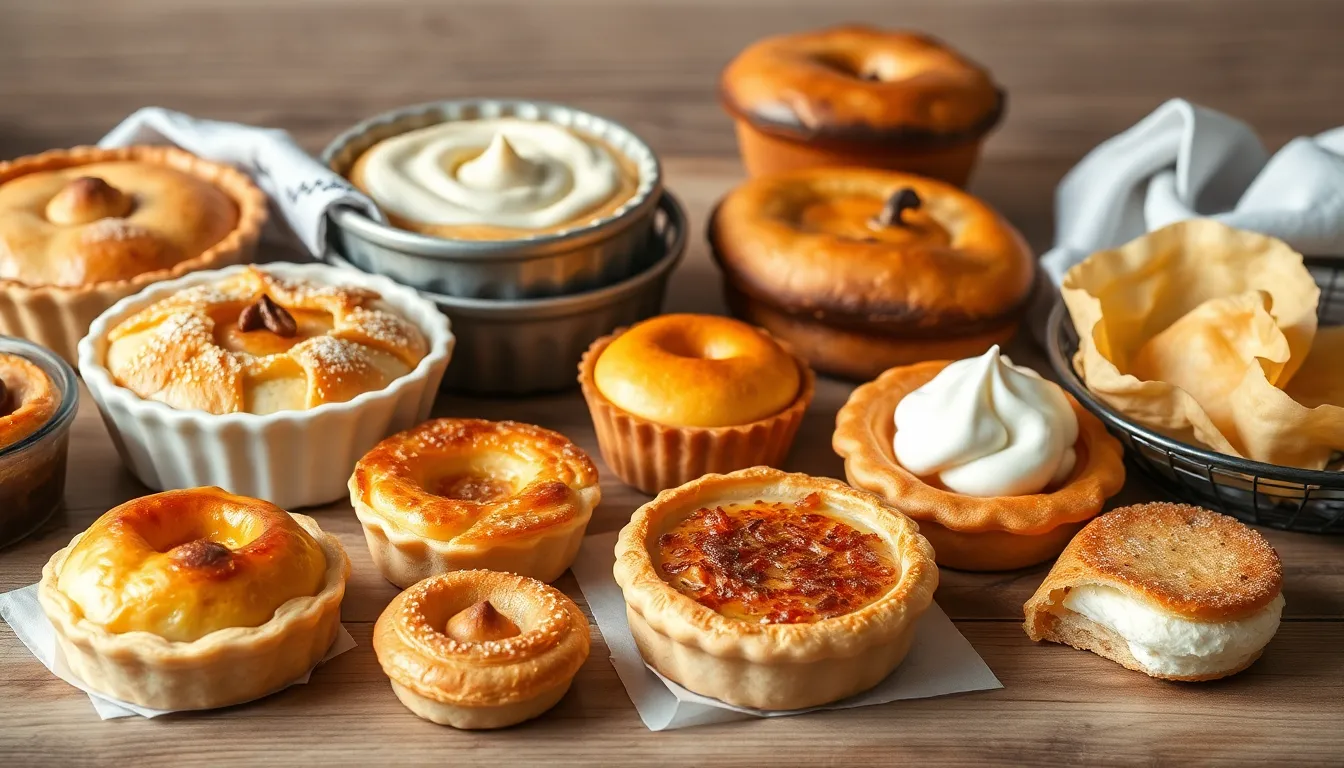
Pastry encompasses a variety of types, each offering unique textures and flavors. Understanding these different pastries enhances the baking experience.
Shortcrust Pastry
Shortcrust pastry features a rich, crumbly texture, perfect for pies and tarts. Bakers incorporate cold butter into the flour, creating a tender base. Serving as a foundation for sweet and savory dishes, it’s often blind-baked to maintain structure. People appreciate shortcrust for its versatility and ease of preparation. Common examples include apple pie and quiche, showcasing its adaptability in various culinary contexts.
Puff Pastry
Puff pastry stands out due to its flaky layers, achieved by folding and rolling dough with butter. This method creates steam during baking, resulting in a light and airy texture. Used in both sweet and savory applications, it pairs well with fillings like cream cheese or fruit preserves. Chefs often utilize puff pastry for dishes such as vol-au-vents and palmiers. Its luxurious texture elevates any dish it adorns.
Choux Pastry
Choux pastry, known for its lightness, forms the base for eclairs and cream puffs. Bakers blend water, flour, eggs, and butter, creating a dough that puffs when baked. Filling options abound, including whipped cream, custard, or savory options like cheese. The versatility of choux brings both elegance and creativity to desserts. Classic examples, like profiteroles, demonstrate its popularity in pastry kitchens.
Filo Pastry
Filo pastry, consisting of thin sheets, produces crispy, flaky dishes. A key feature includes brushing each layer with butter or oil to achieve its signature crunch. This pastry shines in Mediterranean dishes like baklava and spanakopita. Working with filo demands patience, as it easily tears. However, its delicate texture and delightful crunch reward skilled bakers with stunning results.
Essential Techniques in Pastry Making

Pastry making requires precision, creativity, and a few essential techniques to achieve the perfect results.
Measuring Ingredients
Accurate measurement of ingredients is crucial in pastry making. Using a kitchen scale ensures precision, especially for flour, sugar, and butter. Weight measurements provide consistency across different recipes and conditions. Understanding differences between weight and volume helps avoid mistakes. For example, one cup of flour can weigh around 120 grams, while another ingredient, like brown sugar, might weigh 220 grams. Recipes may require specific types of flour; therefore, knowing the type used ensures optimal texture and flavor.
Mixing Methods
Mixing methods vary based on the type of pastry being prepared. For shortcrust pastry, a method called “cutting in” combines butter and flour until the mixture resembles coarse crumbs. This technique keeps the butter cold, resulting in a tender crust. Alternatively, the “creaming” method works well for choux pastry, where sugar and butter are blended until light and fluffy. Each mixing method influences the final texture. For instance, overmixing dough can lead to toughness, while undermixing may yield a poor structure.
Rolling and Shaping
Rolling and shaping play significant roles in the presentation and texture of pastries. A well-chilled dough eases rolling and minimizes sticking to surfaces. Using a rolling pin ensures even thickness, crucial for uniform baking. Cutting dough into shapes allows for creativity; whether using cookie cutters or freehand techniques, unique designs enhance visual appeal. Proper shaping techniques can create pockets for fillings in pastries like turnovers or croissants, contributing to their overall texture. Maintaining an even rollout creates consistent puffing and baking results.
Common Mistakes in Pastry Making
Pastry making can involve several common pitfalls that may hinder the final product’s success. Being aware of these mistakes can help achieve better results.
Overworking the Dough
Overworking dough poses a significant risk. Doing so can develop gluten, leading to a tough texture instead of the desired flakiness. While incorporating ingredients, bakers should gently mix until just combined. Keeping the mixing process brief helps maintain tenderness. Using chilled ingredients can also reduce the need to overwork dough, preserving its desired qualities. Recognizing when the dough comes together allows for a better outcome. Handling it with care makes for a lighter, flakier result in baked pastries.
Improper Baking Times
Baking at incorrect times can affect pastry quality. Underbaking results in a soggy texture, while overbaking can lead to dryness. Many bakers find that oven thermometers ensure accurate temperature readings, contributing to optimal baking times. Starting with the recommended baking duration provides a good foundation. Inspecting pastries during the final minutes of baking can prevent overcooking. Visual cues, such as golden-brown surfaces or risen textures, indicate doneness effectively. Adjusting baking times based on specific ovens and pastry types can lead to perfect results.
Conclusion
Mastering pastry making is a rewarding journey that blends technique with creativity. Whether it’s crafting a buttery croissant or a delicate éclair each pastry is a testament to the baker’s skill and imagination. By understanding key ingredients and essential techniques bakers can elevate their creations and delight those who enjoy them.
Embracing the process of making pastries not only enhances culinary skills but also fosters a sense of accomplishment. With practice patience and a willingness to learn from mistakes anyone can create stunning pastries that impress and satisfy. The joy of sharing these delicious treats transforms everyday moments into cherished memories.