

Baking isn’t just a science; it’s an art form that transforms simple ingredients into mouthwatering masterpieces. Whether it’s a fluffy cake that makes birthdays unforgettable or cookies that disappear faster than you can say “preheat,” mastering the oven can turn anyone into a kitchen superstar. But let’s face it—baking can feel like deciphering hieroglyphics without a Rosetta Stone.
Essential Baking Equipment
Baking requires specific equipment to ensure success. Proper tools streamline the process and enhance results.
Measuring Tools
Accuracy in baking starts with reliable measuring tools. Cup sets for dry ingredients offer standard measurements. A liquid measuring cup serves well for wet ingredients. Digital scales provide precision for bakers seeking exactness. Measuring spoons assist in adding small amounts of ingredients, like baking powder or salt. Investing in these tools simplifies tasks and promotes consistency in recipes.
Baking Pans and Sheets
Baking pans and sheets play crucial roles in shaping treats. Round cake pans create perfect layers for cakes, while square pans excel for brownies. Cookie sheets enable even baking of cookies, ensuring a golden-brown finish. Muffin tins yield well-formed cupcakes and muffins. Selecting non-stick options can reduce sticking and improve presentation. Aluminum pans distribute heat evenly, which is beneficial for achieving desired textures.
Mixing Bowls and Utensils
Mixing bowls and utensils facilitate effective ingredient combining. A set of mixing bowls in various sizes accommodates diverse recipes. Silicone spatulas help scrape every bit of batter out of bowls, minimizing waste. Wooden spoons provide sturdy mixing options for dense mixtures, like cookie dough. Whisks allow for thorough blending of dry and wet ingredients. Using these tools encourages efficient mixing for optimal baked goods.
Basic Baking Ingredients
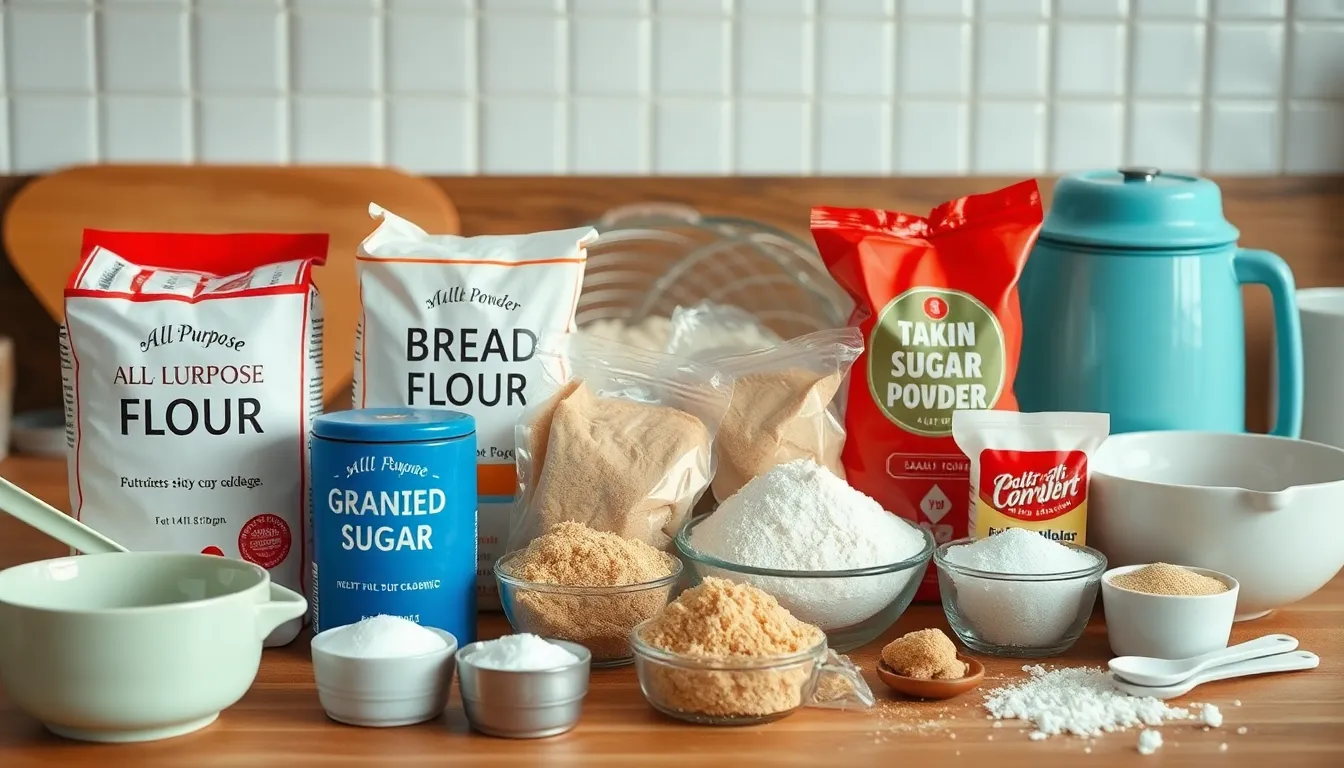
Baking requires specific ingredients that form the foundation of many delicious recipes. Understanding these ingredients enhances the baking experience.
Flour Types
All-purpose flour works for a broad range of recipes. Bread flour contains a higher protein content, making it ideal for yeast breads. Cake flour features a lower protein level, resulting in softer, tender cakes. Whole wheat flour adds nutritional value and a nutty flavor to baked goods. Specialty flours, such as almond flour or coconut flour, cater to dietary restrictions and unique recipes.
Sugars and Sweeteners
Granulated sugar serves as a standard sweetener for most baked goods. Brown sugar adds moisture and a hint of caramel flavor due to its molasses content. Confectioners’ sugar, often used in icings and dusting, offers a fine texture. Natural sweeteners like honey or maple syrup provide alternative flavors and may offer health benefits. Finally, sugar substitutes, including stevia or monk fruit, cater to those seeking lower-calorie options.
Leavening Agents
Baking soda acts as a powerful leavening agent in recipes that include acidic components. Baking powder combines both acid and base, providing a reliable rise in various batters. Yeast, a living organism, ferments and expands dough, creating airy textures. Cream of tartar serves as a stabilizer for whipped egg whites, ensuring their volume remains intact. These leavening agents create the desired lightness in baked goods, contributing to their overall texture.
Baking Techniques
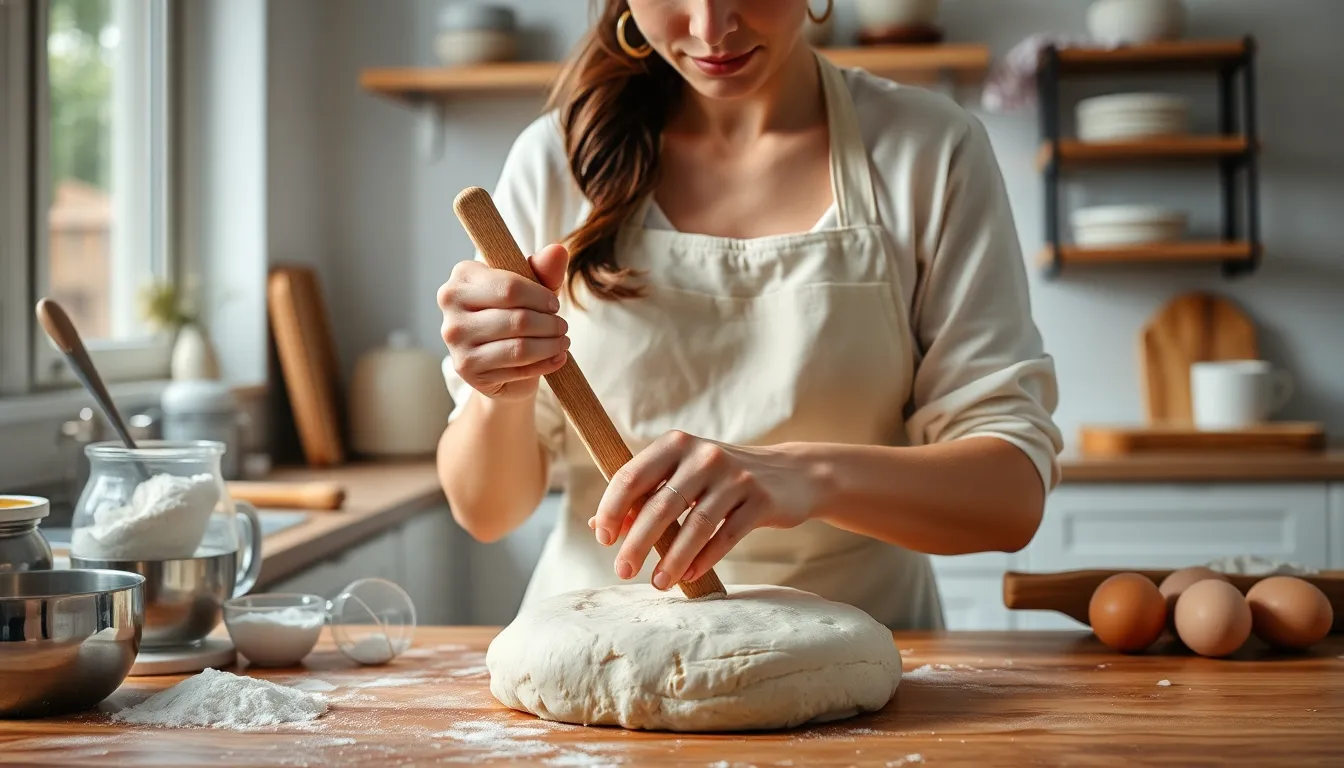
Baking requires various techniques to achieve the best results. Each method enhances specific baked goods’ textures and flavors.
Mixing Methods
Mixing methods vary based on the desired outcome. The creaming method involves beating butter and sugar together until fluffy, perfect for cookies and cakes. The blending method combines dry and wet ingredients, ensuring even distribution of flavors. For delicate batters, the whisking technique incorporates air, creating light and airy textures. Kneading emphasizes gluten development, and it strengthens dough for yeast breads. Various methods affect the final product’s structure, so choosing wisely is crucial.
Folding and Kneading
Folding and kneading create unique textures in baked goods. Folding incorporates air gently, especially in soufflés and sponge cakes, to preserve lightness. A gentle hand avoids deflating the mixture. On the other hand, kneading is essential for breads and pizza doughs. It develops the gluten structure, allowing dough to stretch and rise effectively. Each technique complements the ingredients, contributing to the overall success of the final item.
Baking Temperatures and Times
Baking temperatures and times play vital roles in achieving desired results. Most recipes begin baking at preheated temperatures, usually between 325°F and 375°F. High temperatures, such as 425°F, suit items requiring crispiness, like pastries. Baking times vary significantly; cookies may only take 10 to 15 minutes, while breads might need 30 to 60 minutes. Monitoring the baking process ensures items don’t overbake or underbake. Using an oven thermometer helps maintain accuracy, leading to perfect outcomes every time.
Popular Baking Recipes
Baking offers a variety of delicious options for all occasions. Some popular recipes showcase the versatility and creativity involved in this culinary art.
Cakes and Cupcakes
Cakes and cupcakes represent a wide range of flavors and styles. Classic vanilla and chocolate remain favorites, but red velvet and carrot cake also add unique twists. Adding fruits or nuts enhances flavor and texture, while creative icing designs make these treats visually appealing. Moisture is crucial for success, so incorporating sour cream or buttermilk often yields tender, flavorful cakes. Recipes typically call for proper measuring and mixing techniques to ensure a perfect rise.
Cookies and Brownies
Cookies and brownies offer endless possibilities for customization. Chewy chocolate chip cookies favor the use of brown sugar, while crispy cookies rely on granulated sugar. Recipes can include additional ingredients like oats, nuts, or dried fruit for texture and flavor. Brownies may be fudgy or cakey, depending on the ratio of flour to fat. Experimenting with different chocolate types, such as dark or white chocolate, enhances the depth of flavor. Conditioning the dough in the refrigerator helps prevent spreading during baking.
Breads and Pastries
Breads and pastries provide various textures and tastes, ranging from fluffy loaves to flaky croissants. Yeast breads require proofing to develop flavor and texture, while quick breads like banana bread use baking soda or powder for leavening. The dough for pastries often includes butter for flakiness, critical for turns and folds. Sweet pastries can include fillings like fruit preserves or cream cheese, adding richness to the flavor. Maintaining consistent temperatures during the baking process ensures optimal results.
Troubleshooting Common Baking Issues
Baking presents challenges, but understanding common issues helps achieve successful outcomes. Here are some frequent problems and their solutions.
Overmixing or Undermixing
Overmixing leads to tough baked goods due to excessive gluten development. To prevent this, mix until just combined, particularly for cookies and cakes. Undermixing results in uneven texture and insufficient ingredient incorporation. Checking for visible streaks of flour ensures adequate mixing. A general guideline suggests using a light hand for delicate batters, while stronger mixing is acceptable for doughs requiring more structure.
Incorrect Oven Temperature
Incorrect oven temperature can ruin baking. An oven that’s too hot may burn the exterior while leaving the center raw. On the other hand, a cool oven may result in excessive dryness. Using an oven thermometer provides accurate temperature readings, promoting consistency. Preheating the oven before placing baked goods inside ensures even cooking. Adjusting recipes based on oven characteristics enhances results, allowing for better control over the baking process.
Ingredient Substitutions
Ingredient substitutions require caution. Swapping one type of flour for another may affect texture and rise. For instance, whole wheat flour can yield denser results compared to all-purpose flour. Substituting baking powder for baking soda or vice versa requires adjustments, as their chemical properties differ. When using dairy alternatives, consider their fat content, as it impacts texture. Researching specific substitutions can ensure successful adaptations without compromising flavor or structure.
Conclusion
Baking offers a delightful blend of creativity and precision. With the right tools and techniques anyone can transform simple ingredients into mouthwatering creations. Understanding the science behind baking and mastering essential methods empowers bakers to tackle recipes with confidence.
Embracing the joy of baking not only brings delicious results but also fosters a sense of accomplishment. Whether experimenting with flavors or perfecting classic recipes the journey of baking is filled with rewarding experiences. With practice and patience anyone can overcome challenges and enjoy the sweet rewards of their efforts.