


Cooking for kids can feel like trying to solve a Rubik’s Cube blindfolded. With picky eaters and ever-changing tastes, parents often find themselves in a culinary battle. But fear not! Creating meals that kids love doesn’t have to be a chore. It can actually be a fun adventure filled with laughter, creativity, and a sprinkle of chaos.
Benefits of Cooking for Kids
Cooking for kids offers multiple benefits, from skill development to healthier eating choices. Engaging children in the kitchen nurtures their growth in various ways.
Enhancing Life Skills
Developing essential life skills occurs naturally when kids participate in cooking. Cooking teaches them to follow instructions, improving their ability to execute tasks. Problem-solving skills enhance as they encounter and address kitchen challenges. Time management becomes important as they learn to balance meal prep with cooking and cleanup. Communication skills benefit too, as they discuss ideas and preferences with caregivers. These experiences equip children with valuable skills useful for their future.
Promoting Healthy Eating Habits
Healthy eating habits start early when kids actively participate in meal preparation. Exposure to fresh ingredients encourages curiosity about different foods. Cooking together motivates children to try new items they might otherwise avoid. Involvement in food selection fosters ownership of their choices, leading to better dietary decisions. Nutrition awareness grows as children learn about healthy food options. Cooking also strengthens family bonds, reinforcing the importance of shared mealtime experiences.
Fun and Simple Recipes
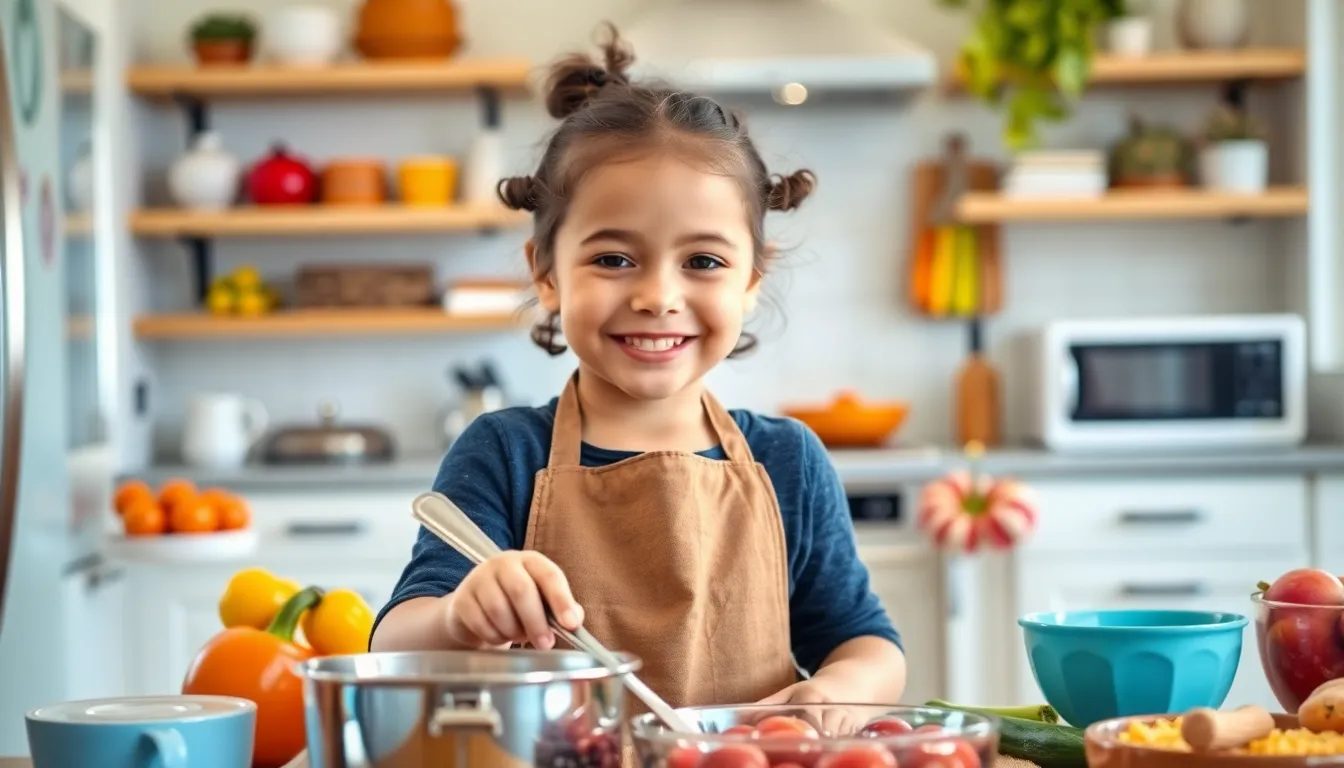
Cooking for kids can be a creative adventure. Kids can enjoy preparing meals that are not only tasty but also fun to make.
Breakfast Ideas
Pancakes offer a delightful start to the day. Incorporate fruits like blueberries or bananas into the batter. Smoothies blend appealing flavors with nutrition. Use spinach, yogurt, and a variety of fruits for a vibrant green drink. Oatmeal stands out as a healthy option. Top it with nuts, seeds, or honey for added flavor. Muffins provide versatility. Include chocolate chips or berries to make them kid-friendly.
Lunch Box Treats
Wraps create exciting lunch options. Fill tortillas with turkey, cheese, and veggies, then slice for easy handling. Fruit skewers combine fun presentation with healthy snacking. Alternate pieces of fruit for colorful arrangements. Veggie cups filled with hummus keep things visually appealing and nutritious. Cheese sticks bring simplicity and protein. Pack popcorn as a light treat that’s easy and satisfying.
Dinner Solutions
Tacos allow for customization. Set out various toppings like lettuce, cheese, and salsa for children to create their own meals. Stir-fry offers a quick, tasty option. Use chicken, colorful peppers, and broccoli cooked in a flavorful sauce for an enjoyable dinner. Pizza night encourages creativity. Provide dough and a selection of toppings for children to design their own pizzas. Pasta salad combines ease with freshness. Toss cooked pasta with cherry tomatoes, olives, and dressing for a vibrant dish.
Involving Kids in the Kitchen
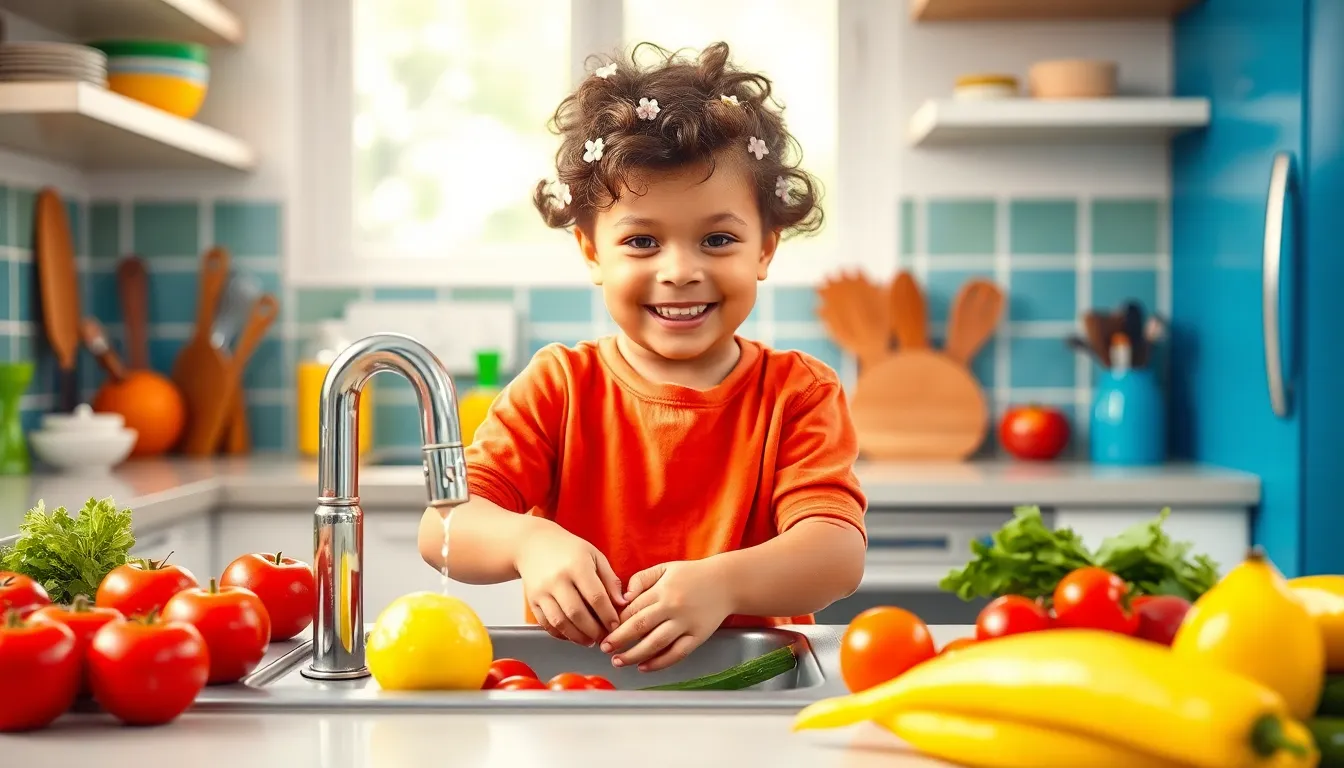
Engaging kids in cooking encourages skills and fosters a love for food. Parents can involve children at various levels to enhance their kitchen experience.
Age-Appropriate Tasks
Assigning tasks based on age yields productive participation. Toddlers can help with washing vegetables or stirring ingredients. Preschoolers easily progress to measuring ingredients and assembling simple dishes. School-age kids can tackle chopping soft fruits and vegetables, under supervision. Teenagers might take on more complex tasks, such as following recipes and handling kitchen equipment. Each of these activities contributes to skill development and builds confidence in the kitchen.
Safety First
Prioritizing safety is essential when cooking with kids. Supervision remains important, especially for younger children. Using child-friendly tools minimizes risks; for instance, plastic knives allow kids to cut soft foods safely. Teaching proper hand-washing techniques prevents foodborne illnesses. Keeping hot surfaces and sharp utensils out of reach protects curious little hands. Establishing clear kitchen rules also ensures a safe cooking environment while encouraging independence.
Creative Cooking Tips
Cooking for kids can be an exciting journey. Parents can instill joy through engaging methods that keep children interested.
Making It Fun
Incorporating games transforms cooking into playtime. Filling recipes with vibrant colors creates visual appeal. Crafting themes for meal preparation, such as “Under the Sea” or “Superhero Night,” adds excitement. Dedicating a day each week for cooking adventures strengthens family bonds. Offering choices gives kids a sense of control, enhancing their involvement. Allowing them to decorate their plates promotes creativity. Celebrating small achievements fosters confidence, encouraging further participation. Laughter and experimentation make the kitchen a welcoming space.
Encouraging Experimentation
Inviting kids to create their own recipes sparks innovation. Introducing unusual ingredients ignites curiosity and broadens their palates. Organizing taste tests helps them discover new flavors. Allowing experimentation with textures engages their senses. Setting aside time for trial and error enhances problem-solving skills. Showing them how to modify recipes cultivates flexibility in cooking. A few simple adjustments can lead to unexpected delights. Emphasizing that mistakes are part of the process nurtures resilience.
Conclusion
Cooking for kids opens up a world of creativity and fun in the kitchen. By engaging children in meal preparation parents not only make cooking enjoyable but also instill valuable life skills. These shared experiences strengthen family bonds and encourage healthier eating habits.
With simple and exciting recipes at their fingertips parents can transform mealtime into an adventure. The kitchen becomes a space for exploration where kids learn about fresh ingredients and develop a lifelong love for cooking. Embracing the chaos and creativity of cooking together can lead to lasting memories and a deeper appreciation for food.