
Food photography techniques can transform an ordinary dish into a visual masterpiece. Whether shooting for a restaurant menu, food blog, or social media feed, the right approach makes all the difference. Great food photos don’t happen by accident. They require an understanding of lighting, composition, styling, and post-processing. This guide covers the essential food photography techniques that professional photographers use to capture mouth-watering images. From camera settings to editing workflows, these practical tips will help elevate any culinary shoot.
Table of Contents
ToggleKey Takeaways
- Mastering food photography techniques starts with understanding lighting—use diffused natural light from a window or position artificial lights at a 45-degree angle with softboxes for professional results.
- Choose your shooting angle based on the dish: overhead for flat foods like pizza, 45-degree for most plates, and straight-on for tall, layered items like stacked pancakes.
- Apply the rule of thirds and use negative space to create dynamic, polished compositions that draw attention to the hero dish.
- Style food with fresh ingredients, a light brush of oil for shine, and strategic garnishes—but avoid over-styling that looks artificial.
- Use a tripod with aperture settings between f/2.8–f/11 depending on your desired depth of field, and keep ISO low (100–400) for clean, sharp images.
- Complete your food photography techniques with post-processing: adjust white balance for natural colors, boost vibrance subtly, and apply selective sharpening to textures.
Mastering Natural and Artificial Lighting
Lighting sits at the core of every successful food photograph. The way light hits a dish determines its texture, color, and overall appeal.
Natural Light
Natural light remains the go-to choice for many food photographers. A window with diffused daylight creates soft shadows and brings out the true colors of ingredients. Position the food near a north-facing window for consistent, even illumination throughout the day. Avoid direct sunlight, it creates harsh shadows and blown-out highlights that distract from the food.
Use a white foam board or reflector on the opposite side of the light source. This bounces light back onto the dish and fills in dark shadows. The result? A balanced image with visible detail in both bright and dark areas.
Artificial Light
Artificial lighting offers control that natural light can’t match. Continuous LED panels work well for beginners because they let photographers see exactly how the light falls before clicking the shutter. For more power and flexibility, many professionals prefer strobes or speedlights.
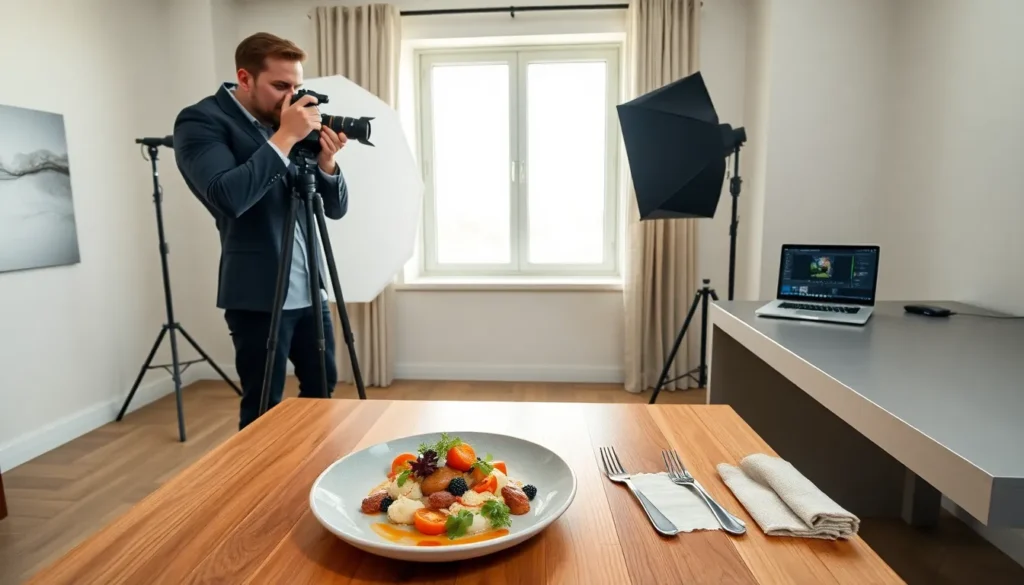
The key is to mimic natural light as closely as possible. Position artificial lights at a 45-degree angle to the food, slightly above and to the side. Add a softbox or diffusion panel to soften harsh edges. This setup replicates the look of window light while offering complete control over intensity and direction.
Food photography techniques rely heavily on understanding how different lighting setups affect the final image. Side lighting emphasizes texture in crusty bread or grilled meats. Backlighting makes beverages glow and adds drama to steam rising from hot dishes.
Choosing the Best Angles and Composition
Camera angle shapes how viewers perceive a dish. Different foods look best from different perspectives, and choosing the right one can make or break a shot.
Popular Shooting Angles
The overhead shot (also called flat lay) works perfectly for flat foods like pizza, salads, and charcuterie boards. This angle shows the entire spread and highlights patterns and arrangements.
The 45-degree angle mimics how diners see their plates at a table. It’s versatile and flattering for most dishes, from burgers to pasta bowls.
The straight-on angle suits tall foods with layers, think stacked pancakes, towering burgers, or layered cakes. This perspective showcases height and structure.
Composition Rules
The rule of thirds places the main subject off-center for a more dynamic image. Imagine the frame divided into a 3×3 grid and position the hero dish at one of the intersecting points.
Negative space gives the eye room to rest. A cluttered frame overwhelms viewers, while strategic empty areas draw attention to the food itself.
Leading lines guide the viewer’s gaze toward the main subject. A fork, a trail of crumbs, or the edge of a napkin can all serve this purpose. These food photography techniques create images that feel intentional and polished.
Styling and Propping Your Food
Food styling separates amateur snapshots from professional food photography. The goal is to make dishes look fresh, appetizing, and visually interesting.
Styling Basics
Fresh ingredients photograph better than cooked ones in many cases. Professional stylists often undercook vegetables slightly to preserve their vibrant colors. Herbs should be added last, they wilt quickly under hot lights.
Oil brushed on proteins adds a glossy, just-cooked appearance. A spray bottle filled with water creates appealing condensation on glasses and fresh produce. These small touches add life to otherwise flat-looking images.
Garnishes matter. A sprinkle of sea salt, a drizzle of sauce, or a strategically placed herb sprig adds color and interest. But restraint is important, over-styling looks fake and unappetizing.
Props and Backgrounds
Props tell a story and add context to food images. Vintage silverware, linen napkins, wooden cutting boards, and rustic ceramics all contribute to the mood. Match props to the style of cuisine, modern white plates suit minimalist presentations, while weathered wood complements rustic comfort food.
Backgrounds should complement without competing. Neutral tones like gray, white, and natural wood work for most dishes. Textured surfaces like marble, slate, or worn butcher block add visual interest without overwhelming the food.
Food photography techniques extend beyond the camera. The styling and prop choices communicate as much as the lighting and composition.
Camera Settings and Equipment Essentials
The right gear and settings help photographers capture sharp, well-exposed food images consistently.
Camera and Lenses
A DSLR or mirrorless camera offers the control needed for professional results. Full-frame sensors perform better in low light, but crop-sensor cameras work perfectly fine for most food photography.
A 50mm lens (or 35mm on crop sensors) provides a natural perspective without distortion. An 85mm or 100mm macro lens allows for close-up detail shots of textures and ingredients. Many food photographers consider a macro lens essential for their kit.
Key Settings
Aperture controls depth of field. A wide aperture (f/2.8–f/4) blurs the background and isolates the subject. A narrower aperture (f/8–f/11) keeps more of the scene in focus, useful for flat lays where everything should appear sharp.
ISO should stay as low as possible to avoid noise. With proper lighting, ISO 100–400 produces clean images. In darker conditions, modern cameras handle ISO 800–1600 well.
Shutter speed depends on the shooting situation. For tripod work, slower speeds work fine. For handheld shooting or capturing action like pouring sauces, faster speeds (1/125 or higher) prevent blur.
A tripod is nearly essential for food photography. It ensures sharp images at any shutter speed and allows precise composition adjustments. Food photography techniques become much easier to execute with a stable camera platform.
Editing Tips for Professional Results
Post-processing brings food images to life. Even well-shot photos benefit from careful editing.
Basic Adjustments
Start with white balance. Food should look natural, not too warm (orange) or too cool (blue). Adjust until whites appear truly white and colors match what the eye saw during the shoot.
Exposure and contrast adjustments add punch to flat images. Lift the shadows slightly to reveal detail in darker areas. Pull back highlights if any bright spots appear blown out.
Saturation and vibrance make colors pop. Vibrance affects muted tones more than already-saturated colors, making it the safer choice for food. A light touch works best, oversaturated food looks artificial and unappetizing.
Advanced Techniques
Local adjustments target specific areas. Use a radial filter or adjustment brush to brighten the hero dish while keeping the background slightly darker. This draws the viewer’s eye exactly where it should go.
Sharpening adds crispness to textures like sesame seeds, bread crusts, and fresh herbs. Apply it selectively to avoid introducing noise in smooth areas like sauces or creamy soups.
Color grading creates a consistent look across a series of images. Many food photographers develop signature presets that give their work a recognizable style.
Lightroom, Capture One, and Photoshop remain the industry standards for editing. Mobile apps like Snapseed and VSCO offer capable alternatives for quick edits. Mastering these food photography techniques in post-processing completes the creative process.