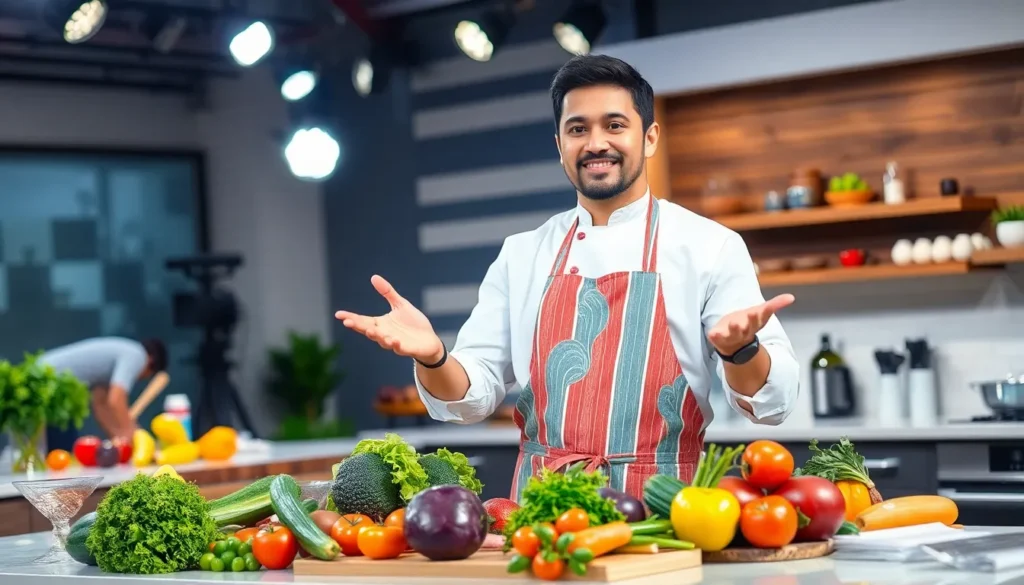

Food TV has taken the culinary world by storm, blending entertainment with mouthwatering inspiration. It’s not just about recipes; it’s a feast for the eyes and a tantalizing journey for the taste buds. From flamboyant chefs tossing ingredients like confetti to home cooks battling it out in high-stakes competitions, Food TV serves up drama, humor, and a sprinkle of culinary magic.
Food TV
Food TV has transformed from simple recipe demonstrations into a complex blend of entertainment and culinary education. This evolution reflects changes in viewer preferences and the desire for more engaging content.
The Rise of Cooking Shows
Cooking shows gained popularity in the 1990s, changing how audiences interact with food. Programs like “The Frugal Gourmet” and “Julia Child’s Cooking with Master Chefs” allowed viewers to connect with diverse cooking styles and cultures. As food competition shows appeared, such as “Iron Chef” and “Top Chef,” the stakes rose, captivating viewers with culinary battles. These formats introduced suspense and unpredictability, appealing to a broader audience and encouraging home cooks to experiment in their kitchens.
Influential Food TV Personalities
Numerous chefs have shaped the landscape of Food TV, becoming household names. Emeril Lagasse’s energetic “Bam!” brought charisma to his cooking, while Rachael Ray’s approachable style made cooking accessible to many. Giada De Laurentiis and Ina Garten showcased both sophistication and simplicity, influencing home cooks across the nation. Each personality contributed to Food TV’s storytelling aspect, where food becomes a narrative of culture, family, and adventure. The impact of these figures demonstrates how effective personalities captivate interest and inspire culinary creativity.
Food TV Shows
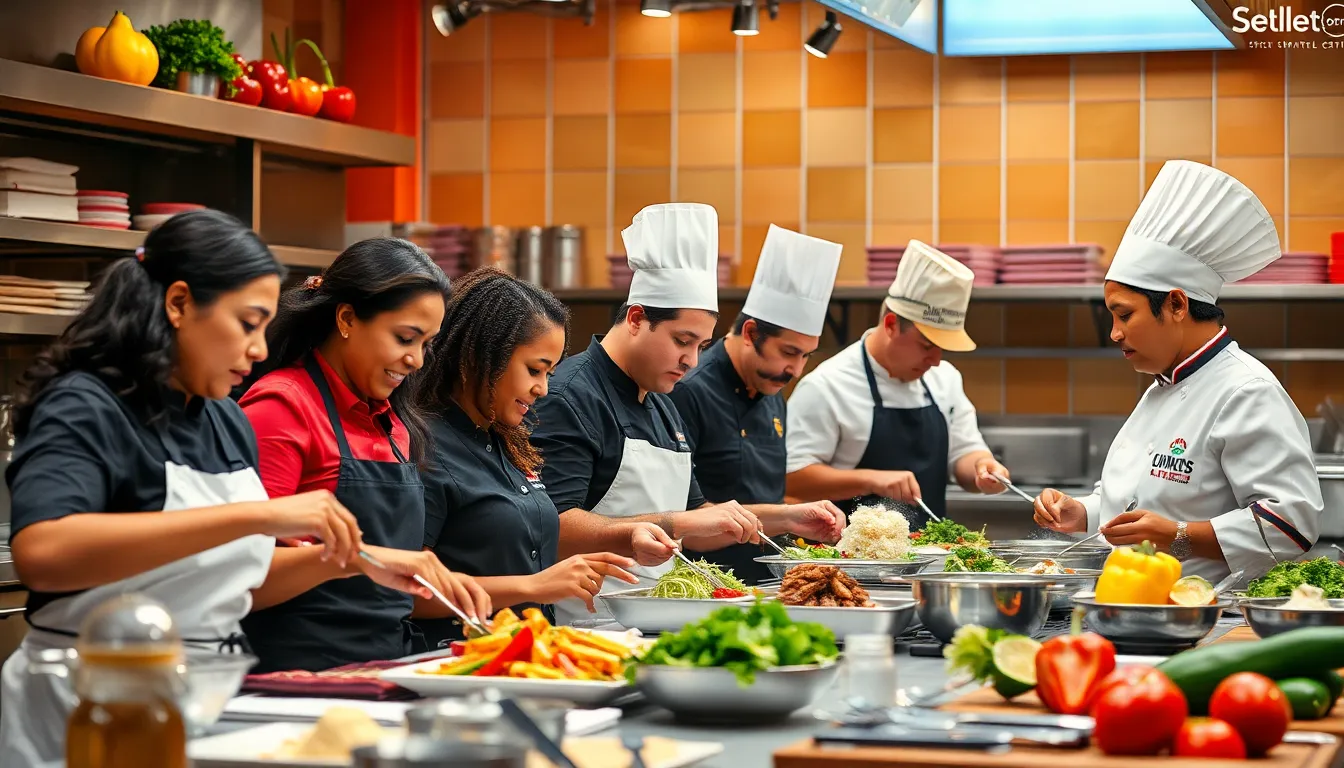
Food TV encompasses various genres that cater to diverse viewer interests and tastes. Each genre offers a unique perspective on cooking, culture, and creativity.
Competition Series
Competition series energize audiences with thrilling culinary challenges. These shows, such as “Top Chef” and “Chopped,” feature chefs competing for awards. Each episode presents a new challenge, pushing competitors to resort to their culinary talents. Viewers witness creativity in action as chefs adapt to unexpected ingredients. Judges, often consisting of notable chefs or food critics, play a crucial role in deciding the winner. Tensions build as contestants navigate the pressure of time constraints, making these shows captivating and engaging.
Travel and Culture Shows
Travel and culture shows provide viewers with a feast for the senses. Programs like “Anthony Bourdain: Parts Unknown” showcase local cuisines from around the world. Each episode allows audiences to explore diverse cultures through food. Food enthusiasts learn about ingredients, cooking techniques, and traditions unique to different regions. Hosts often interact with locals, adding authenticity to the experience. This genre highlights the connection between food and cultural heritage, enriching viewers’ understanding of global culinary practices.
Food TV Shows 2023
Food TV significantly shapes culinary trends, influencing how audiences view cooking and food culture. This medium introduces various styles, recipes, and cooking techniques, ultimately changing consumer habits in the kitchen.
Recipe Popularity and Accessibility
Recipe accessibility increases through Food TV, making cooking approachable for diverse audiences. Popular shows present easy-to-follow recipes, allowing viewers to replicate dishes at home. Stars like Rachael Ray emphasize simplicity, encouraging beginners to experiment with their culinary skills. Seasonal ingredients and regional dishes gain traction as viewers explore different cuisines alongside their favorite hosts. As a result, home cooks become more adventurous, trying new flavors and techniques that they might otherwise overlook.
Influence on Home Cooking
Home cooking experiences a renaissance fueled by Food TV personalities. Chefs such as Ina Garten share personal stories and relatable approaches, creating a welcoming atmosphere. Their charm and expertise inspire confidence, allowing viewers to tackle complex recipes they assume require professional skills. Influential competition shows like “Chopped” stimulate creativity, challenging audiences to think outside traditional cooking formulas. Consequently, this shifts the perception of home cooking from routine tasks to enjoyable, rewarding culinary adventures that cultivate a passion for food.
Criticism and Controversies in Food TV
Food TV faces criticism on various fronts, especially regarding representation and the accuracy of food competitions.
Representation and Diversity Issues
Critics often highlight the lack of diversity among Food TV hosts and contestants. Viewers frequently point out that many shows feature predominantly white chefs, leading to concerns about underrepresentation of various cultures. Greater representation can enrich culinary storytelling and celebrate diverse cooking traditions. Moreover, audiences expect platforms that reflect the demographic makeup of the country. Producers must prioritize inclusivity to resonate with a broader audience.
The Reality of Food Competitions
The portrayal of food competitions can mislead viewers about the culinary process. Often, behind-the-scenes realities differ from the excitement shown on screen. Contestants frequently face time constraints, impacting food quality and presentation. Judges may make decisions based on entertainment value rather than purely culinary merit. Misrepresentation occurs when editing creates narratives that do not align with actual experiences. Maintaining transparency can enhance viewer trust and appreciation for the challenges contestants endure.
Conclusion
Food TV has undeniably transformed the culinary landscape by blending entertainment with education. It inspires viewers to explore new flavors and techniques while connecting them to diverse cultures. The influence of charismatic chefs and engaging formats has made cooking more accessible and enjoyable for everyone.
As the genre continues to evolve, it faces challenges like representation and authenticity. Addressing these issues will enhance viewer trust and ensure that Food TV remains a relevant and enriching resource. Ultimately, Food TV not only entertains but also empowers home cooks to embark on their culinary journeys with confidence and creativity.