
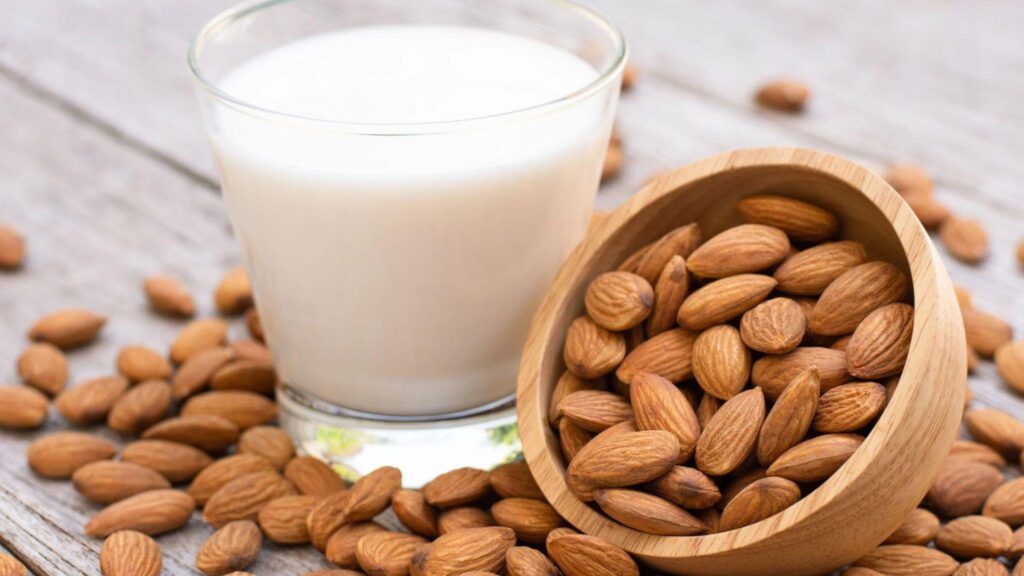

Almond milk has become a popular plant-based beverage for consumers looking for alternatives to traditional dairy products. Its mild flavor, versatility, and ability to work in a variety of food and beverage applications have also made it an important ingredient for manufacturers.
But have you ever wondered how almond milk is made?
The process involves more than simply blending almonds with water. From selecting quality raw materials to grinding, filtration, fortification, and pasteurization, each stage contributes to the final product’s taste, texture, consistency, and safety.
Understanding how almond milk is processed also highlights the importance of using high-quality almond ingredients and reliable manufacturing practices.
Table of Contents
ToggleHow Almond Milk Is Made: The 7 Main Processing Steps
Commercial almond milk production involves several stages designed to transform whole almonds into a smooth, consistent beverage. While specific manufacturing methods can vary between producers, the general process follows these seven steps.
Step 1: Selecting High-Quality Almonds
The quality of the finished almond milk begins with the almonds themselves.
Manufacturers select almonds based on factors such as size, variety, and overall condition. Starting with quality ingredients helps establish the flavor, consistency, and characteristics of the final product.
The selection process is particularly important for manufacturers producing almond milk at a commercial scale. Consistent raw materials help support consistent production and product quality.
For conventional and organic almond milk, sourcing reliable almond supplies is an important part of maintaining manufacturing standards.
Step 2: Cleaning and Preparing the Almonds
Once the almonds have been selected, they undergo preparation before further processing.
Cleaning removes dirt, debris, and other unwanted materials that may be present. Blanching may also be used to remove the almond skins.
Removing the skins can help produce a smoother texture and a lighter appearance in the finished beverage.
These preparation steps establish a cleaner, more consistent starting point for the next stage of production.
Step 3: Grinding Almonds Into a Paste
After preparation, the almonds are processed into a fine paste.
Grinding is one of the most important stages because it transforms the solid almonds into an ingredient that can be incorporated into the beverage.
The amount of water used in relation to the almonds influences the resulting product’s flavor and consistency. Manufacturers can adjust this ratio depending on their desired formulation.
Industrial grinding equipment helps achieve a consistent paste suitable for further processing.
The resulting almond paste serves as the foundation for producing almond milk.
Step 4: Fortifying Almond Milk With Vitamins and Minerals
Some almond milk products are fortified to improve their nutritional composition.
During this stage, manufacturers may add vitamins and minerals such as:
- Calcium
- Vitamin D
- Vitamin E
Fortification allows manufacturers to develop products that meet different nutritional preferences and market requirements.
The specific nutrients and amounts depend on the product formulation. Not every almond milk product contains the same fortification ingredients.
Step 5: Filtering for a Smooth Texture
After the almond mixture has been prepared, filtration separates the liquid from the remaining almond pulp.
This stage helps create the smooth consistency commonly associated with commercial almond milk.
Manufacturers may use fine mesh filters or centrifugal processes to separate solid particles from the liquid.
Filtration also helps control the beverage’s texture and appearance. The degree of filtration can influence how much almond material remains in the finished product.
Achieving the desired consistency is important for creating an almond milk base that performs well in different food and beverage applications.
Step 6: Pasteurizing the Almond Milk
Food safety is a critical part of commercial almond milk production.
Pasteurization uses heat treatment to reduce harmful microorganisms and help extend the product’s shelf life.
Two commonly used approaches include:
High-Temperature Short-Time (HTST) Pasteurization: This method uses high temperatures for a relatively short period to treat the beverage.
Ultra-High-Temperature (UHT) Processing: This method uses higher temperatures for a very short period and is commonly associated with products designed for extended shelf life when packaged aseptically.
The appropriate processing method depends on the product formulation, packaging, and manufacturing requirements.
Proper thermal processing and handling help manufacturers produce almond milk that meets applicable food safety standards.
Step 7: Packaging and Preparing for Distribution
Once processing is complete, the almond milk is packaged for storage and distribution.
Common packaging formats include cartons, bottles, and pouches. The packaging must be suitable for the product and its intended storage conditions.
Proper packaging helps protect the beverage from contamination and preserve its quality during transportation and storage.
After packaging, products move through the distribution process and eventually reach retailers, food manufacturers, and consumers.
Why Does Almond Quality Matter in Almond Milk Production?
The quality of the finished beverage depends partly on the ingredients used during manufacturing.
Almond variety, condition, and consistency can influence the characteristics of the almond paste used as the foundation for the beverage.
Reliable sourcing is especially important for manufacturers that need to maintain consistent product specifications across large production volumes.
Working with an experienced almond supplier can help manufacturers secure dependable ingredients while supporting their processing and formulation requirements.
What Makes Commercial Almond Milk Processing Different From Homemade Almond Milk?
Homemade almond milk is generally made by soaking almonds, blending them with water, and straining the mixture to separate the liquid from the pulp.
Commercial production follows a more controlled process designed to achieve consistency, food safety, and scalability.
Some of the key differences include:
- Ingredient selection: Commercial manufacturers establish sourcing and quality requirements for their almond supplies.
- Processing equipment: Industrial grinding and filtration equipment support large-scale production.
- Product formulation: Manufacturers can adjust almond-to-water ratios and add vitamins or minerals based on their product specifications.
- Food safety controls: Commercial operations use controlled processing methods, including pasteurization where appropriate.
- Packaging: Products are packaged using formats and processes suited to their intended distribution and storage conditions.
These differences allow manufacturers to produce almond milk at a larger scale while maintaining defined product characteristics.
Choosing the Right Almond Supplier for Your Production Needs
For food and beverage manufacturers, selecting the right almond supplier is an important part of developing a reliable almond milk product.
A dependable supplier should be able to provide consistent ingredient quality, appropriate processing capabilities, and documentation that supports the manufacturer’s food safety and quality requirements.
Other considerations include:
- Availability of conventional and organic almond ingredients
- Consistent supply and sourcing capabilities
- Processing technology and production capacity
- Relevant food safety certifications
- Ability to support different product formulations
- Experience supplying commercial food and beverage manufacturers
These factors can help manufacturers identify a partner that understands the requirements of large-scale almond processing.
Supporting Quality Almond Milk Production With Harris Woolf Almonds
Understanding how almond milk is made reveals how much work goes into transforming almonds into a finished beverage. Every stage, from selecting the raw ingredients to grinding, filtration, pasteurization, and packaging, contributes to the final product.
For manufacturers, the process starts with choosing the right almond ingredients and working with a supplier that can support consistent production.
Harris Woolf Almonds works with a network of more than 200 farms and provides conventional and organic almond ingredients for commercial food and beverage applications. Its processing facilities produce almond paste, a key ingredient used in almond milk manufacturing.
Harris Woolf Almonds also offers almonds with certifications including Kosher, Halal, SQF, and Bee Better Certified, supporting a range of customer and manufacturing requirements.
Whether you are developing a new almond milk product or looking for a dependable source of almond ingredients, Harris Woolf Almonds can help support your production needs.