

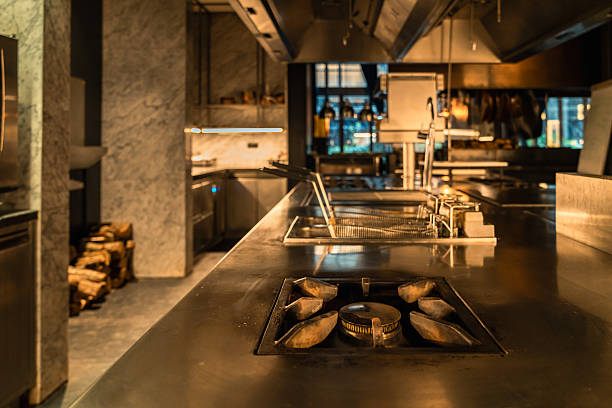
In the modern chef-driven culinary environment, which is highly dynamic, the modern restaurant design is far beyond the looks and the atmosphere: it is the performance, the accuracy, and profitability. With the increase in consumer requirements and the growing competition, the restaurant industry needs to adopt innovation even in its core. The kitchen is one of the most important fields that is fueling this evolution. The annex to any great dining experience is a properly furnished, smart designed kitchen with innovative tools and technology.
The Shift Toward Modern Restaurant Design
The design of the modern restaurant is not limited to the stylish interior or minimalistic design. It is an integrated philosophy, which is a blend of functionality, technology and efficiency to produce smooth workflow and outstanding dining experiences.
The current foodservice facilities are reconsidering the way the kitchen functions, both in terms of equipment location and the implementation of digital technology that keeps track of the temperature, stock levels, and energy usage. These innovations do not only consist of following the trends but rather being competitive in a highly competitive industry.
With the change of operations of a restaurant under the influence of technological advancements, the investment in high-end commercial kitchen appliances became one of the most important factors to ensure that the output and consistency could be maximized.
The Role of Smart Technology in Restaurant Efficiency
The use of smart technology is transforming the way restaurants work. Kitchens are also becoming smarter with AI-based ovens that are optimized to make cooking times more efficient, fridges that are connected to the internet that notifies staff about changes in temperature.
This kind of technological integration will minimize human error, waste and also guarantee consistency-traits that determine the successful contemporary restaurants. Smart equipment is also more energy efficient, which is increasingly becoming a priority as sustainability takes center stage in the operations of restaurants.
Due to the changing ways of doing business with the advent of technology, the need to invest in high performance commercial kitchen equipment has been essential in the quest to maximize the output and consistency.
How Kitchen Design Impacts Profitability
The kitchen design of a restaurant has a direct influence on the speed of service to the quality of food. Not well designed kitchens may result in bottlenecks, overallocated space and an unhappy staff. Conversely, intelligent kitchen layout provides a rational progression of prep, cooking and serving areas, enhancing both productivity and enthusiasm.
In the modern layouts, data-driven layout is applied whereby the real-time operations are used to influence the layout of equipment and workstations to be placed. This enables the chefs to flow from activity to activity maximizing every square foot. The result? Increased productivity, less operation costs and better customer satisfaction.
With the changing nature of operations with the advent of technology, the need to invest in high-performance commercial kitchen equipment has been identified as a way of maximizing the output and consistency.
The Rise of Modular and Compact Equipment
Space is among the most precious services of the contemporary restaurants, particularly in the urban places where every inch counts. A flexible solution is found in the existing modular and compact commercial kitchen equipment which allows operators to design layouts that suit the types of menu and volume of service.
Stackable ovens to multi-function cookers are some of the modular units that are space saving and more versatile. This scalability enables restaurants to be agile in terms of adding new items to the menu or shifting to a delivery-only format.
Moreover, small design eases the process of maintenance and cleaning thus saving time on down time and enhancing the life cycle of expensive equipment.
Data-Driven Decision Making in the Kitchen
The contemporary kitchen is driven by data more and more. Machinery is now giving real-time information on performance ratios, servicing requirements and energy usage. Such analytics will help restaurant managers make better and more informed decisions by providing data to enhance operations and profitability.
Its predictive maintenance systems, such as the performance sensors, monitor performance-related problems before they come to a stop. Such pro-active mechanism will avoid expensive repair processes and provide smooth service even at the peak times.
Kitchens based on data also assist managers with evaluating the efficiency of the staff, monitoring stocking, and analyzing the performance of the menu, all of which lead to eventual success.
The Human Element: Empowering Staff Through Innovation
Although technology has been shown to be significant in contemporary restaurant design, the human aspect is something unquestionably indispensable. Every successful operation is centered on chefs, servers and kitchen staff. Smart equipment does not substitute them, it makes them more powerful.
By automating routine or physically challenging activities, like monitoring the temperature or even dishwash cycles, the staff members will have more time to devote to creativity, presentation, and communication with customers. This does not only increase job satisfaction, but also adds value to the overall dining experience.
With a unification of the principles of the people-centric design and remaining abreast with the current technological advancements, restaurants are hitting the right chord, when it comes to the balance between the innovation and hospitality.
With the world being redefined by technology in its operations, the importance of investing in high performance commercial kitchen equipment has come up and this has enabled optimization of the output and uniformity.
The Future of Restaurant Design
Finally the restaurant design of tomorrow is a combination of smartness, flexibility and sustainability. Given that the demands of customers keep on changing, restaurants need to remain dynamic by adopting technologies that can make operations lean and improve on service quality.
The future of restaurants will be more efficient and profitable than it has ever been as robotics will be used, as well as AI-based ordering systems. It is the question of careful designing and wise choice of the equipment that will help innovation and develop.
With technology transforming the operations, investment in high performance in commercial kitchen equipment has been the solution to maximum output and consistency.
Conclusion
The style of a modern restaurant design displays the changing needs of the consumers and technological development directly. Smart designs, data-driven, and cost-saving features are no longer the luxury features, but they are now the requirements. Innovation, versatility and sustainability will be the future characteristics of the kitchens.
With the operations taking a new face due to technology, high-performance commercial kitchen equipment has proven to be important in terms of output and consistency maximization.