
Caviar, often described as the “black gold” of the culinary world, evokes images of luxury, refinement, and indulgence. Its delicate, briny pearls have graced the tables of royalty and aristocrats for centuries, and today it has transitioned into high-end gastronomy enjoyed by food enthusiasts around the globe. The history of caviar is a fascinating journey, spanning ancient civilizations, imperial courts, and modern gourmet kitchens, reflecting not only culinary evolution but also socio-economic and environmental changes.
Origins of Caviar
The story of caviar begins in the Caspian and Black Sea regions, where sturgeon have been harvested for thousands of years. Ancient Persians are credited with discovering the prized roe of sturgeon, and historical records suggest that they considered it a delicacy as early as the 5th century BC. The word “caviar” itself is believed to have Persian roots, derived from the term khav-yar, meaning “egg-bearing.”
Persian fishermen originally salted the sturgeon roe to preserve it, creating a simple yet exquisite food that could be stored and transported. The delicate flavor of caviar quickly became synonymous with wealth and status, making it a coveted commodity among the elite. While the Persian Empire thrived, the trade of sturgeon roe expanded, reaching neighboring civilizations and laying the groundwork for caviar’s ascent in global gastronomy.
Caviar in Imperial Europe
Caviar’s journey from Persia to Europe marked the beginning of its association with royalty and aristocracy. By the Middle Ages, caviar had become a symbol of opulence among Russian and Eastern European nobility. The Russian Tsars, in particular, embraced the sturgeon roe as a courtly delicacy. According to historical accounts, Tsar Peter the Great, who ruled in the 17th century, frequently indulged in caviar and promoted its production along the Volga and Caspian rivers.
In Russia, caviar was traditionally served with blini (small pancakes) or on buttered bread, a practice that continues to this day. The Russian Imperial Court elevated caviar to an art form, influencing European perceptions of luxury food. By the 19th century, caviar had reached Western Europe, captivating French and British aristocrats. Parisian haute cuisine chefs experimented with new presentations, pairing caviar with champagne and fine wines, further cementing its status as a delicacy reserved for the upper echelons of society.
The American Introduction
Caviar’s introduction to the United States occurred during the late 19th and early 20th centuries, coinciding with the arrival of Russian immigrants. Initially a curiosity for the American elite, it gained broader recognition during the Jazz Age of the 1920s, when luxury foods became emblematic of sophistication and modernity. Caviar began appearing in upscale New York hotels, restaurants, and private dinner parties, often served alongside oysters, foie gras, and champagne.
Despite its growing popularity, authentic sturgeon caviar remained scarce in America, largely due to limited domestic sturgeon populations and strict import regulations. As a result, the U.S. relied heavily on imports from Russia and later from Iran, which became renowned for producing some of the finest beluga and sevruga caviars.
Environmental Impact and Sustainability
The rise in global demand for caviar has had profound ecological consequences. Overfishing and habitat destruction led to a dramatic decline in wild sturgeon populations throughout the 20th century. By the 1980s, several sturgeon species faced the threat of extinction, prompting international regulations to protect these ancient fish. The Convention on International Trade in Endangered Species (CITES) imposed strict controls on caviar exports, and several countries enacted national bans on wild sturgeon fishing.
These environmental pressures spurred innovation in aquaculture. Today, farmed sturgeon are the primary source of high-quality caviar. Aquaculture not only helps conserve wild populations but also allows for consistent production and quality control. Countries such as France, Italy, China, and the United States have developed sophisticated sturgeon farms that produce caviar ethically and sustainably, ensuring the survival of this luxury food for future generations.

Caviar in Modern Cuisine
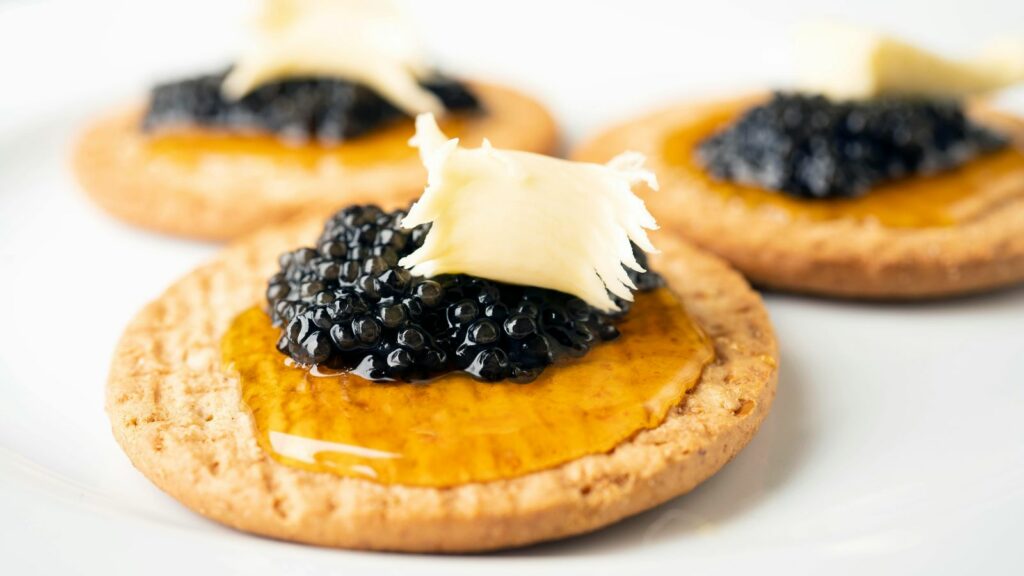
Modern culinary trends have transformed caviar from a symbol of aristocratic excess into an ingredient celebrated for its flavor and versatility. Chefs across the world experiment with caviar, incorporating it into both traditional dishes and contemporary creations. While it is still enjoyed atop blinis and toast points, caviar now complements sushi, pasta, seafood, and even innovative desserts. Its unique texture—creamy, yet slightly popping—and its delicate salty flavor make it a highly sought-after ingredient for haute cuisine and fine dining.
Brands like OM Caviar are leading the way in delivering sustainably farmed, premium-quality caviar that appeals to both traditionalists and modern food enthusiasts. In addition to traditional sturgeon caviar, alternative varieties such as salmon, trout, and whitefish roe have gained popularity. These types of caviar offer more accessible price points while retaining a luxurious gastronomic experience. This democratization of caviar has expanded its reach beyond elite circles, allowing a wider audience to appreciate its distinctive qualities.
Cultural Significance
Beyond its culinary appeal, caviar carries a rich cultural symbolism. In Russia, it is emblematic of national pride and traditional hospitality, often featured during holidays and important celebrations. In Western countries, it has historically signified sophistication and exclusivity, appearing in literature, films, and art as a marker of wealth. Today, caviar’s cultural relevance is evolving, reflecting changing attitudes toward sustainability, ethical sourcing, and global cuisine.
The Future of Caviar
The future of caviar lies at the intersection of tradition, innovation, and sustainability. Advances in aquaculture technology allow for the production of high-quality caviar without depleting wild sturgeon populations. Simultaneously, chefs continue to explore creative uses of caviar, blending culinary heritage with contemporary trends. As consumers become more conscious of environmental impact and ethical sourcing, sustainably farmed caviar is poised to become the standard, ensuring that this ancient delicacy remains both a luxury and a responsible choice.
Caviar’s journey—from ancient Persian fishermen to royal courts, American high society, and modern gourmet kitchens—illustrates its enduring allure and adaptability. It is more than just fish roe; it is a testament to human creativity, luxury, and the evolving relationship between food and culture. Whether served at a royal banquet or a contemporary tasting menu, caviar continues to captivate the senses, offering a unique experience that transcends time and geography.