


Traveling the globe can be as simple as taking a bite. From the spicy streets of Bangkok to the cozy cafés of Paris, world cuisines offer a passport to adventure without the jet lag. Each dish tells a story, weaving together culture, tradition, and a sprinkle of love that makes every meal unique.
Imagine savoring a creamy risotto in Italy or biting into a crispy taco in Mexico—your taste buds will thank you. Food isn’t just fuel; it’s an experience that connects people and places. So, grab your fork and get ready to explore the vibrant tapestry of flavors that our planet has to offer. Who knew that culinary exploration could be so deliciously fun?
Overview of World Cuisines
World cuisines encompass a vast array of flavors, techniques, and traditions. Each dish represents its cultural heritage, revealing stories about its people and history. Exploring cuisines fosters appreciation for diversity while deepening the understanding of local customs.
Different regions boast unique ingredients, reflecting the landscapes and climates in which they develop. For example, tropical areas often feature vibrant fruits and seafood, while mountainous regions may emphasize heartier grains and meats. This variation influences cooking methods, from grilling in open flames to slow simmering in pots.
Traditional dishes often showcase the blend of flavors and spices distinctive to each culture. Indian cuisine, for instance, is known for its aromatic spices and complex curries, while Italian cuisine highlights fresh herbs and robust sauces. Food also plays a pivotal role in cultural celebrations and rituals, marking important life events such as weddings and festivals.
The globalization of food has made world cuisines more accessible. People can now enjoy sushi from Japan, tacos from Mexico, and pasta from Italy in cities around the globe. This culinary exchange enhances the evolution of traditional dishes into modern interpretations.
Adventurous eaters can partake in various dining experiences, from street food stalls to fine dining restaurants. Street food often reflects local flavors and cooking styles, while upscale establishments may incorporate innovative techniques and a fusion of different cuisines. Each experience contributes to a richer understanding of what food represents in human connection and cultural identity.
Popular Cuisines Around the Globe
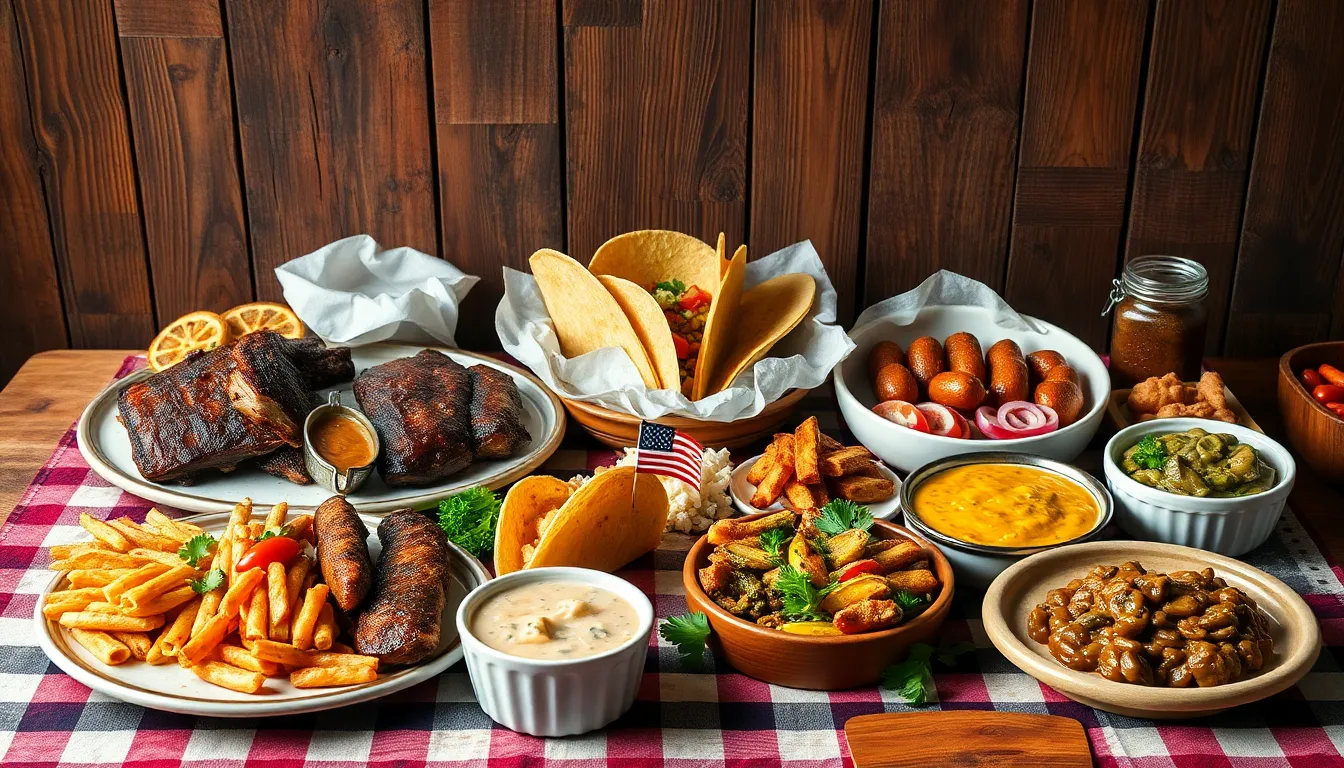
World cuisines showcase diverse flavors, ingredients, and cooking techniques. Each region offers a unique culinary experience that reflects its culture.
Asian Cuisines
Asian cuisines encompass a range of flavors, textures, and cooking styles. Staple ingredients include rice, noodles, and various vegetables. Thai cuisine features vibrant dishes like Pad Thai and green curry, known for their balance of sweet, sour, salty, and spicy elements. Indian food showcases spices such as turmeric and cumin, creating aromatic curries and biryanis. Chinese cuisine emphasizes stir-frying and steaming, presenting dishes like dumplings and Peking duck. Overall, Asian cuisines vary widely, inviting exploration of rich culinary traditions.
European Cuisines
European cuisines combine rich history with regional diversity. Italian cuisine emphasizes high-quality ingredients, making dishes like pasta and risotto favorites worldwide. French culinary techniques influence gourmet dining, evident in dishes such as coq au vin and soufflés. Spanish cuisine celebrates vibrant flavors with tapas and paella, stemming from diverse regional influences. In the United Kingdom, traditional fare includes fish and chips, showcasing local ingredients and comfort. Each European region boasts distinct flavors, fostering a culinary tapestry that invites discovery.
African Cuisines
African cuisines reflect the continent’s cultural diversity and agricultural practices. Staples like corn, millet, and cassava form the basis of many dishes across regions. North African cuisine showcases spices like cumin and coriander in tagines and couscous. West African dishes often feature groundnut soups and jollof rice, known for their rich flavors. East Africa offers unique taste profiles with its emphasis on grilled meats and coconut milk in curries. Overall, African cuisines invite an exploration of distinct culinary heritage.
American Cuisines
American cuisines present a melting pot of global influences, reflecting the nation’s cultural diversity. Barbecue showcases regional variations, from Texas brisket to Kansas City ribs. Latin American flavors emerge in dishes such as tacos and empanadas, highlighting vibrant ingredients and spices. New England offers seafood dishes like clam chowder, while Southern cuisine celebrates comfort foods such as fried chicken and collard greens. Each American region promotes a unique culinary identity, revealing flavors that tell the story of its people and their traditions.
Influences on World Cuisines
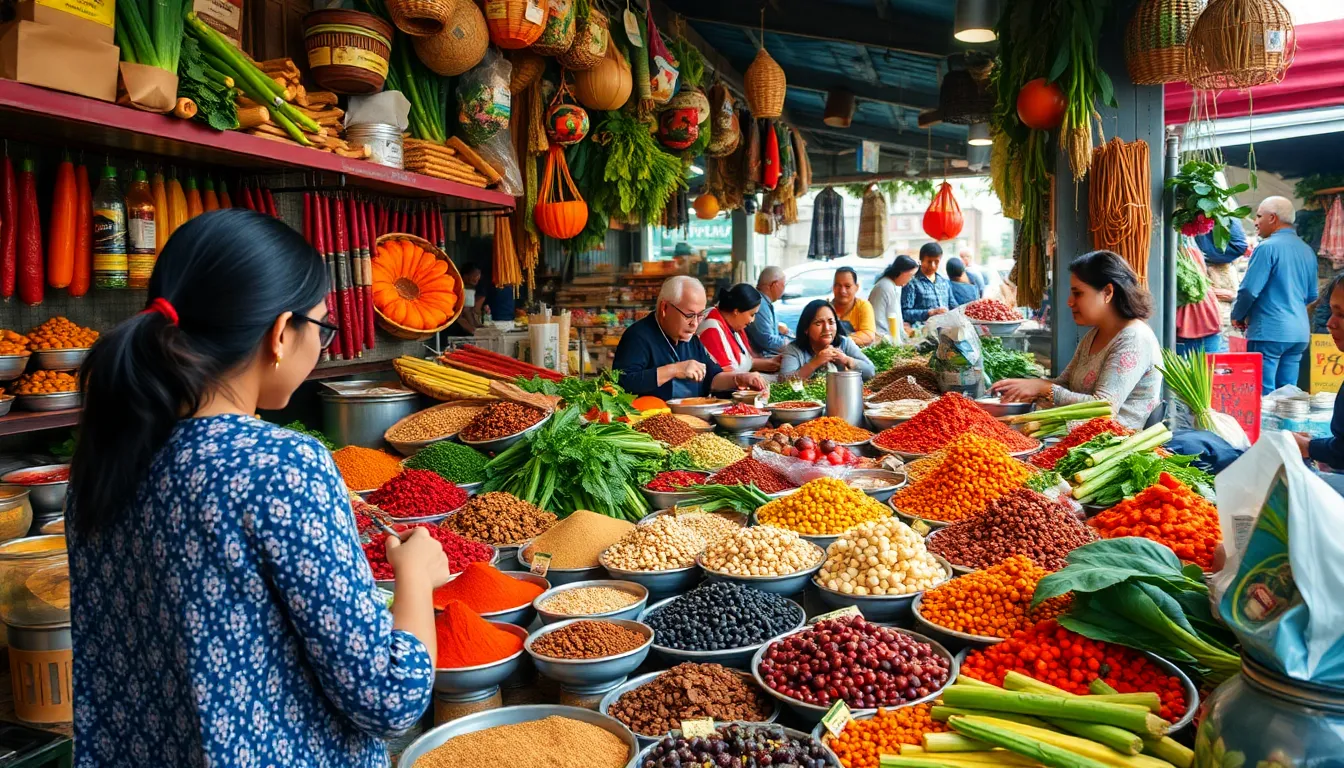
Food across cultures reflects more than just taste; it embodies a rich story of humanity. Various influences shape these global cuisines and foster diverse culinary experiences.
Cultural Exchanges
Cultural exchanges, driven by migration and trade, greatly enhance world cuisines. Ingredients travel across borders, transforming local dishes. For example, the introduction of tomatoes from the Americas revolutionized Italian cuisine, leading to iconic dishes like pizza and pasta sauces. Similarly, spices from Asia found their way to Europe, stimulating flavors and culinary techniques. Festivals and shared meals also promote food fusion, where people combine traditional elements, creating unique dishes that celebrate different heritages.
Historical Factors
Historical factors play a critical role in shaping regional cuisines. Colonization and trade routes significantly altered food availability and preparation. The Silk Road facilitated the exchange of spices and ingredients, influencing culinary practices across continents. When the New World introduced staples like potatoes and maize to Europe, diets transformed rapidly. Wars and migration also shifted food practices, blending traditions. The diverse history of interactions among cultures leads to a vibrant tapestry of flavors, each dish telling a story of its origins.
Unique Ingredients in World Cuisines
Unique ingredients define world cuisines, adding depth and character to dishes across the globe. Spices play a crucial role, with Indian cuisine often showcasing bold flavors from ingredients like turmeric and cardamom. In contrast, Mediterranean cuisines highlight fresh produce. Olive oil and feta cheese contribute to the freshness of Greek salads and Italian pasta dishes.
Herbs are essential as well, with Thai cuisine frequently using basil and cilantro to elevate the taste of curries and salads. Grain varieties also influence dishes; for instance, quinoa is a staple in Andean cuisine, providing both nutrition and versatility. Each ingredient reflects local agriculture, climate, and traditions.
Diverse proteins enrich various cuisines. Ethiopian cuisine features lentils and tibs, allowing for flavorful vegetarian and meat-based dishes. In Japan, fresh seafood is paramount, with sushi showcasing the quality of fish caught near its shores. Regional dairy products, such as South African biltong or French cheeses, add richness to local flavors.
Regional sources contribute to the uniqueness of ingredients. African cuisines often include root vegetables such as cassava and yams, deeply rooted in culinary history. Asian cuisines frequently utilize soybeans, leading to products like tofu and miso, integral to many traditional recipes.
Distinctive ingredients create memorable dining experiences. People experience cultural connections through food, often sharing these dishes with friends and families. Bold flavors and unique textures invite exploration, making eating an adventure. Embracing these unique ingredients allows individuals to travel the world through cuisine, tasting the essence of diverse cultures with every bite.
Conclusion
Exploring world cuisines opens a door to understanding diverse cultures and histories. Each dish serves as a narrative that connects people to their roots and traditions. The vibrant flavors and unique ingredients found across the globe not only tantalize the taste buds but also foster a sense of community and belonging.
As individuals embark on their culinary adventures they discover that food is a universal language. It bridges gaps and brings people together. Embracing these global flavors enriches one’s life experience and cultivates appreciation for the rich tapestry of human culture. Every meal becomes an opportunity to celebrate diversity and connect with the world in a meaningful way.