
Food photography vs product photography, two disciplines that look similar on the surface but require completely different approaches. Both aim to sell something. Both demand technical skill. Yet the techniques, equipment, and creative decisions diverge in meaningful ways.
Understanding these differences matters for brands, photographers, and marketers. Choosing the wrong style can make a dish look unappetizing or a product seem lifeless. This guide breaks down what separates food photography from product photography, when each works best, and how professionals approach both.
Table of Contents
ToggleKey Takeaways
- Food photography vs product photography requires different lighting techniques—soft, natural light works best for food, while product shots often need harder, controlled lighting to manage reflective surfaces.
- Food photography focuses on triggering emotional responses and making viewers hungry, while product photography prioritizes accurate representation to help customers make informed purchase decisions.
- Time pressure defines food photography since subjects like salads wilt and ice cream melts, whereas most products remain stable throughout a shoot.
- Food photography typically costs more per image due to perishable ingredients, styling needs, and time constraints, while product photography scales more efficiently for large catalogs.
- Some projects blur the line between food photography vs product photography, such as food packaging or kitchen equipment that requires both accurate product representation and appetizing food imagery.
- For campaigns needing both styles, hiring specialists in each discipline produces better results than relying on a single photographer to handle everything.
What Is Food Photography
Food photography is the art of capturing dishes, ingredients, and beverages in visually appealing ways. It goes beyond simply pointing a camera at a plate. The goal is to make viewers hungry.
This photography style appears everywhere, restaurant menus, cookbooks, social media feeds, food packaging, and advertising campaigns. Each context demands a slightly different approach, but the core purpose stays consistent: trigger an emotional response.
Food photographers work with perishable subjects. A salad wilts. Ice cream melts. Steam disappears. This creates time pressure that shapes every decision, from lighting setup to shooting speed.
Food stylists often work alongside photographers. They arrange ingredients, add garnishes, and use tricks like glycerin spray to keep vegetables looking fresh. Some shoots use stand-in dishes for test shots, then swap in the hero plate at the last moment.
The best food photography tells a story. It shows not just what the food looks like, but how it might taste and feel. Texture, color contrast, and composition all play roles in creating that sensory connection.
What Is Product Photography
Product photography captures commercial items for e-commerce, catalogs, advertisements, and marketing materials. It showcases physical goods, electronics, clothing, cosmetics, furniture, or any item a business wants to sell.
The primary objective differs from food photography. Product shots need to represent items accurately. Customers rely on these images to make purchase decisions. Misleading photos lead to returns and complaints.
Two main styles dominate product photography. White background shots isolate products against clean, distraction-free backdrops. Lifestyle shots place products in context, showing them in use or in styled environments.
Product photographers often work with rigid timelines. E-commerce catalogs may require hundreds of consistent images. Speed and repeatability matter as much as creativity.
Post-production plays a significant role. Color correction ensures product colors match real-life appearances. Background removal, shadow creation, and retouching are standard practices. Many product images receive more editing than food photographs.
Unlike food, most products don’t change during a shoot. A pair of shoes looks the same after four hours. This stability allows photographers to spend more time perfecting each shot.
Core Differences Between Food and Product Photography
Food photography vs product photography presents distinct challenges. The differences affect every stage of the process, planning, shooting, and editing.
Lighting and Styling Techniques
Lighting separates these two disciplines more than any other factor.
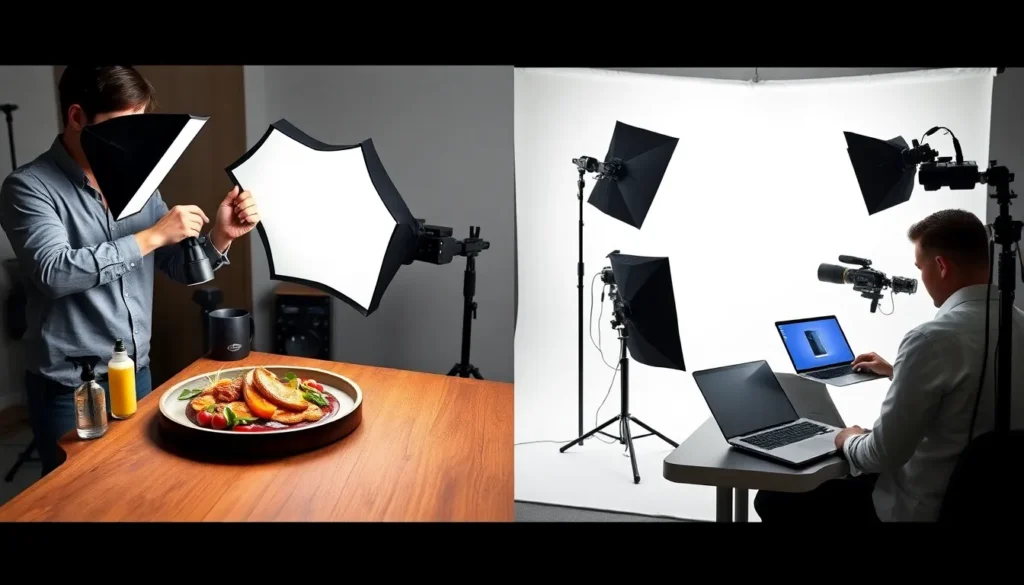
Food photography typically uses soft, natural-looking light. Side lighting and backlighting create depth and highlight textures. Harsh shadows can make food look flat or unappetizing. Many food photographers prefer window light or softboxes that mimic daylight.
Product photography often requires harder, more controlled lighting. Reflective surfaces like glass, metal, or glossy packaging need precise light placement to avoid unwanted reflections. Multiple light sources create clean highlights and define product edges.
Styling approaches also differ significantly. Food styling emphasizes freshness, texture, and appetite appeal. Props like utensils, napkins, and cutting boards add context without overwhelming the dish.
Product styling focuses on showcasing features. A watch needs its dial clearly visible. A skincare bottle should display its label. Background elements support the product rather than compete with it.
Equipment and Setup Requirements
Both photography types share some equipment needs, but specialized tools vary.
Food photography often uses macro lenses to capture close-up details, the glisten on a berry, the grain of bread crust. Reflectors bounce light into shadows. Spray bottles keep produce looking fresh.
Common food photography setups include:
- 50mm or 100mm macro lenses
- Large softboxes or natural window light
- V-flats and bounce cards
- Tethered shooting for immediate review
- Various surfaces and backdrops
Product photography frequently requires more technical equipment. Light tents diffuse light evenly around small items. Turntables create 360-degree product views. Color checkers ensure accurate reproduction across different monitors.
Typical product photography gear includes:
- 85mm to 105mm lenses for sharp detail
- Multiple strobes with precise control
- Light tents and sweep backgrounds
- Tethering software with live view
- Color calibration tools
Food photography vs product photography also differs in studio setup. Product studios often maintain permanent, standardized setups for efficiency. Food studios need flexibility to accommodate cooking equipment and multiple styling stations.
When to Use Each Type of Photography
Choosing between food photography vs product photography depends on what’s being sold and where the images will appear.
Restaurants, cafes, and food brands need food photography. Menu design, social media content, and advertising campaigns all require images that make people crave specific dishes. Food delivery apps rely heavily on appetizing photography to drive orders.
E-commerce businesses selling non-food items need product photography. Online stores require clean, accurate images that show exactly what customers will receive. Amazon, Shopify stores, and retail websites all depend on this style.
Some situations blur the line. Food packaging photography combines both disciplines. The package itself is a product requiring accurate representation, but it contains food that should look appealing.
Brands selling kitchen equipment face similar overlaps. A blender might need standard product shots for the website, plus lifestyle images showing it making smoothies. The smoothie portion becomes food photography within a product context.
Budget considerations also influence decisions. Food photography typically costs more per image due to styling, perishable ingredients, and time constraints. Product photography scales more efficiently for large catalogs.
For campaigns requiring both types, hiring specialists for each produces better results than asking one photographer to handle everything. The skill sets overlap but aren’t identical.